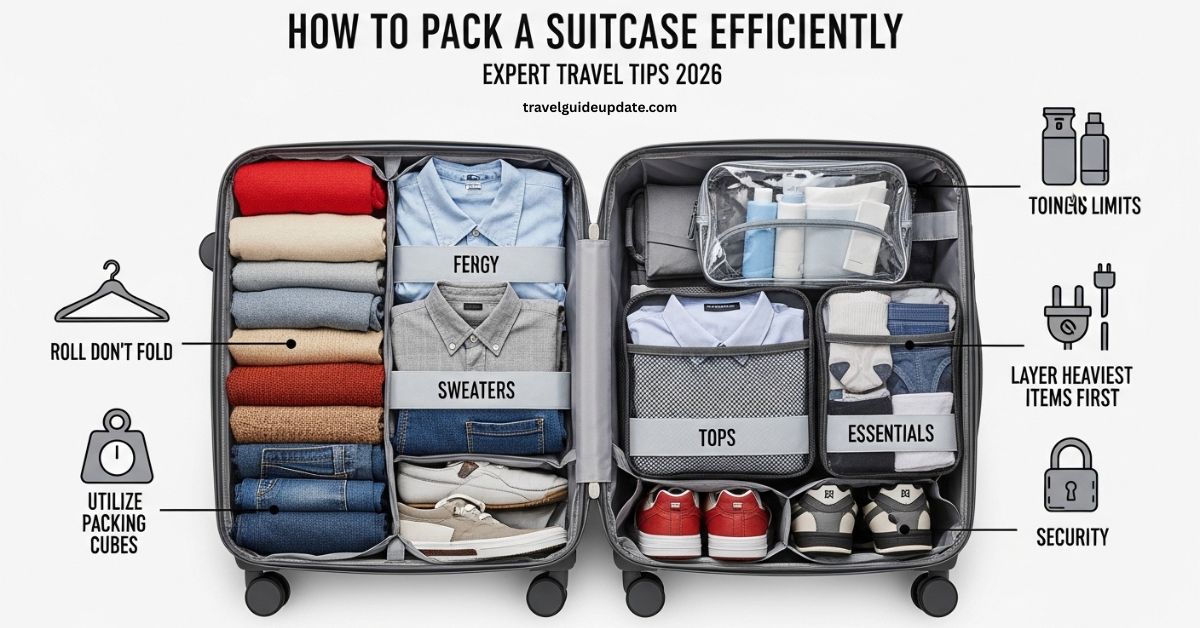
You’ve got a trip coming up. You open your suitcase. You stare at your pile of clothes. And suddenly you have no idea where to start.
We’ve all been there.
Packing a suitcase the right way takes about 30 minutes if you know what you’re doing. Done badly, it costs you money (baggage fees), time (repacking at the airport), and stress (showing up with a wrinkled mess).
This guide covers everything. Clothes, shoes, toiletries, fragile items, packing tools — and a few tricks most packing guides skip.
Pick the Right Suitcase for Your Trip
Before you pack a single thing, make sure you have the right bag. Using a bag that’s too big is one of the most common packing mistakes. A bigger bag just means more stuff — and more weight.
Suitcase Size Guide
| Trip Length | Bag Type | Size |
|---|---|---|
| Weekend (1–3 days) | Personal item or backpack | Under 20L |
| Short trip (3–5 days) | Carry-on suitcase | 20–22 inches |
| 1 week | Carry-on or small checked | 22–24 inches |
| 2 weeks+ | Medium checked bag | 25–28 inches |
| Family travel | Large checked bag | 29–32 inches |
Pro tip: Most airlines allow a carry-on up to 22 x 14 x 9 inches. Always check your airline’s rules before you pack.
Hard Shell vs. Soft Shell
- Hard shell: Better for fragile items. More secure. Less flexible.
- Soft shell: Fits in tight spaces. Easier to squeeze into overhead bins. More external pockets.
Know the Rules Before You Pack
Nothing kills a trip like getting stopped at security. Learn these rules first.
TSA Liquids Rule (3-1-1)
- Each liquid must be in a 3.4 oz (100ml) or smaller container
- All containers go in one clear, quart-size zip bag
- You get one bag per person in your carry-on
Anything bigger goes in your checked bag. And even then, keep bottles no more than three-quarters full. The cargo hold isn’t pressurized the same way, and bottles can pop open and soak your clothes.
Airline Weight Limits
| Bag Type | Common Weight Limit |
|---|---|
| Carry-on | Usually no weight limit (US carriers) or 15–22 lbs (international) |
| Checked bag (economy) | 50 lbs (23 kg) for most US airlines |
| Checked bag (business/first) | 70 lbs (32 kg) |
Going even 1 lb over the limit can cost you $50–$100 in fees. Weigh your bag before you leave home.
Build a Packing List (And Cut It in Half)
Start with a list. This sounds simple. But most people skip it — and then overpack.
Write down every item you think you need. Then go back and cut 20–30% of it. You almost always need less than you think.
The 5-4-3-2-1 Rule for a 7-Day Trip
| Category | Count |
|---|---|
| Tops | 5 |
| Bottoms | 4 |
| Underwear/socks | 7 (one per day) |
| Shoes | 2–3 |
| Outerwear/layers | 1–2 |
Mix neutrals (black, white, gray, navy) so everything works together. One pair of dark jeans can work for a day out, a dinner, and a hike with the right shoes.
Pack Clothes the Right Way
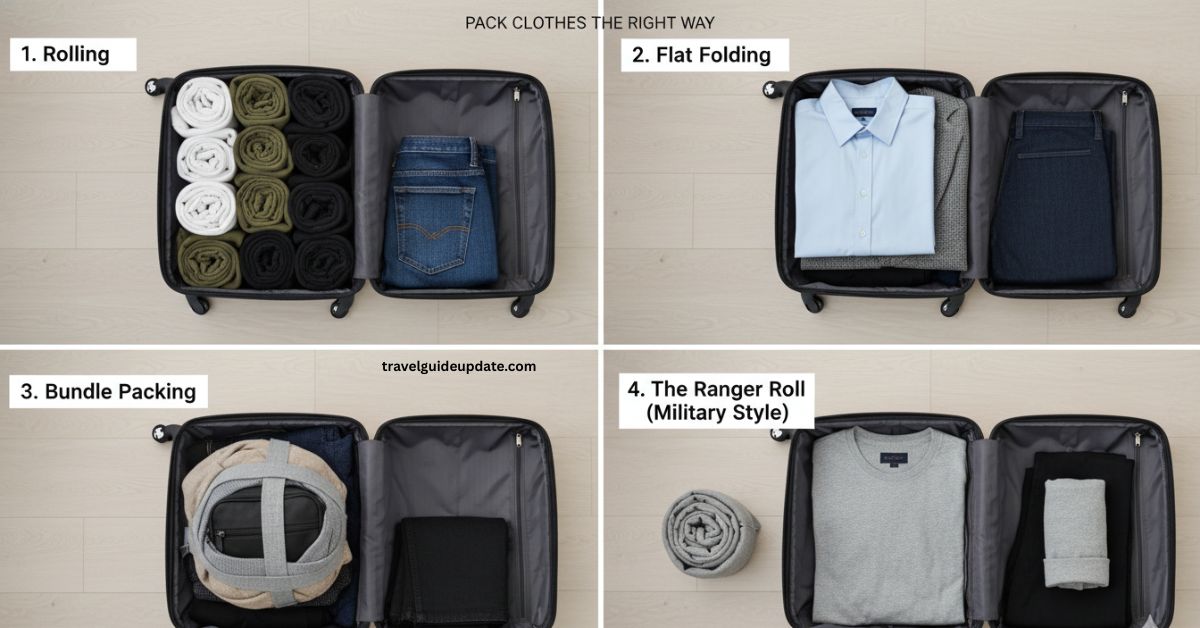
This is where most people go wrong. How you pack matters as much as what you pack.
Method 1: Rolling
Rolling is the most space-efficient method for casual clothes. It works great for:
- T-shirts
- Jeans and casual pants
- Underwear and socks
- Workout clothes
- Synthetic fabrics
How to roll: Fold the item in half lengthwise. Start rolling from the bottom up, tight and firm. Stand rolls upright in your suitcase like a file folder — not flat in stacks.
This lets you see everything at a glance without digging.
Method 2: Flat Folding
Flat folding works best for:
- Dress shirts and button-downs
- Blazers and suit jackets
- Delicate fabrics
- Structured clothing
Stack flat-folded items by size — bigger items at the bottom, smaller on top.
Method 3: Bundle Packing
Bundle packing wraps all your clothes around a central “core” item (usually a small pouch or bag). Larger pieces go on the outside. You end up with one large bundle instead of separate items.
This method almost completely prevents wrinkles because clothes don’t fold against sharp edges. It’s great for business travelers.
Method 4: The Ranger Roll (Military Style)
Used by soldiers for decades. Works best for T-shirts and underwear.
- Lay the shirt flat
- Fold the bottom 3 inches up (creates a cuff)
- Fold the shirt in thirds from the sides
- Roll tightly from top to bottom
- Flip the cuff up and over the roll to seal it
The result is a tight, compact roll that won’t come undone in your bag.
What Method Should You Use?
| Clothing Type | Best Method |
|---|---|
| Casual tees, jeans | Rolling or Ranger Roll |
| Dress shirts, suits | Flat fold or Bundle |
| Workout clothes | Rolling |
| Dresses | Bundle or Flat fold |
| Knits and sweaters | Rolling |
| Linen or silk | Flat fold with dry cleaning bag |
The Right Order for Packing Your Bag
Most people pile things in randomly. Here’s the correct order:
- Heavy items first (shoes, toiletry bag) — closest to the wheels
- Bulky items next (jeans, sweaters) — flat or rolled
- Medium items (shirts, tops) — rolled and tucked around bulkier clothes
- Light items last (underwear, socks) — fill every gap
- Fragile and delicate items — on top, away from pressure
- Frequently needed items — right on top or in outer pockets
Think of your suitcase like a game of Tetris. Every gap is wasted space.
Pack Shoes Without Wasting Space
Shoes are bulky. Here’s how to handle them.
- Wear your biggest shoes on travel day (boots, sneakers)
- Stick to 2–3 pairs maximum: one casual/walking shoe, one sandal or flat, one dressier option
- Fill the inside of shoes with socks, chargers, or small accessories
- Put shoes at the bottom of your bag (near the wheels end)
- Use shoe bags or shower caps over the soles to keep dirt off your clothes
A good trick: put shoe bags over the sole end only, so the inside of the shoe stays accessible for stuffing items inside.
Pack Toiletries Without Spills or Surprises
Toiletries can ruin your whole bag if one bottle leaks. Here’s how to pack them safely.
- Use travel-size containers — they take up less space and follow TSA rules
- Don’t fill bottles all the way — leave a little room to prevent pressure leaks
- Put each bottle in its own small zip bag before placing in your toiletry kit
- Pack your toiletry bag in an outer pocket of your suitcase for easy airport access
- Use multi-purpose products: a 2-in-1 shampoo, a tinted moisturizer with SPF, or a bar soap that works for body and hair
Smart Toiletry Swaps That Save Space
| Full-Size Product | Space-Saving Swap |
|---|---|
| Shampoo + conditioner | 2-in-1 shampoo bar |
| Body wash + face wash | Multi-use cleanser |
| Sunscreen + moisturizer | SPF moisturizer |
| Hair dryer | Most hotels have one — skip it |
| Full makeup kit | Travel palette with only essentials |
Protect Fragile Items and Jewelry
Don’t leave valuables behind just because you’re scared they’ll break.
- Wrap fragile items in clothing (a soft T-shirt works perfectly as padding)
- Use a pill organizer to store rings, earrings, and small jewelry
- Thread necklaces through a straw to prevent tangling
- Keep fragile items in your carry-on where they won’t get tossed around
- Use a travel jewelry roll if you’re bringing multiple pieces — keeps everything organized and tangle-free
Use the Right Packing Tools
The right gear cuts your packing time and saves real space.
Packing Cubes
Packing cubes are small fabric pouches that zip closed and keep your clothes grouped. Use different colors for different categories (shirts, bottoms, underwear).
Benefits:
- Find anything in 10 seconds
- Keeps clothes tidy if you’re living out of a bag
- Compresses clothes slightly
Compression Bags
Compression bags remove excess air from bulky items like sweaters, hoodies, and jackets. You can compress them down to about 50% of their original size. These work best for cold-weather travel or long trips.
Garment Folders
Garment folders are rigid folders designed to keep suits, dress shirts, and blazers wrinkle-free. If you’re traveling for a business trip or a formal event, these are worth it.
Portable Luggage Scale
Buy one. They cost about $10. You weigh your bag before you leave and before you come home (souvenirs add up). Never pay an overweight fee again.
Dry Cleaning Bags
Slip thin plastic dry cleaning bags between layers of clothing to reduce friction. Less friction = less movement = fewer wrinkles. This is an old hotel concierge trick.
5 Packing Mistakes Most People Make
Even experienced travelers fall into these traps.
Mistake 1: Packing “Just in Case” Items
The heaviest words in packing are “just in case.” If you’re unsure whether you’ll need something, you probably won’t. Leave it.
Mistake 2: Forgetting to Leave Room for the Return Trip
You’ll buy things. Souvenirs, clothes, food. Pack your suitcase only 80% full on the way out so you have room coming back — or pack a foldable bag inside for the return.
Mistake 3: Packing Too Many Shoes
Shoes are heavy and bulky. Most people pack 4–5 pairs and wear 2. Pick 2–3 versatile pairs and stick to them.
Mistake 4: Ignoring the Weather
Check the weather at your destination before you pack. Sounds obvious. Most people forget. Packing for heat in a cold destination — or vice versa — wastes space and leaves you uncomfortable.
Mistake 5: Not Keeping a Dirty Clothes Bag
Pack a small mesh or zip bag just for dirty laundry. Without it, your worn clothes mix with your clean ones, and everything smells by day three.
Bonus: How to Pack a Carry-On for a Week? (Yes, It’s Possible)
Packing a week of clothes into a carry-on is one of the best travel skills you can have. Here’s the formula:
- 5 tops (mix of casual and smart)
- 2 bottoms (one jeans, one shorts or skirt)
- 1 dress or smart outfit (doubles as eveningwear)
- 1 light layer (packable jacket or cardigan)
- 2 pairs of shoes (wear the bigger pair at the airport)
- 7 days of underwear and socks
- Toiletries in a small pouch (travel-size everything)
Roll everything. Use packing cubes. Put shoes at the bottom. Toiletry bag in the outer pocket. Done.
Quick-Reference Packing Checklist
Clothing
- [ ] Tops (5 for a week)
- [ ] Bottoms (2–3)
- [ ] Underwear (1 per day)
- [ ] Socks (1 per day)
- [ ] Pajamas or sleepwear
- [ ] Light jacket or layer
- [ ] Workout clothes (if needed)
- [ ] Swimwear (if needed)
- [ ] One smarter outfit for evenings
Shoes
- [ ] Comfortable walking shoes (wear these)
- [ ] Sandals or flats
- [ ] Dress shoes (only if needed)
Toiletries
- [ ] Toothbrush + toothpaste
- [ ] Shampoo (travel size)
- [ ] Conditioner or 2-in-1
- [ ] Body wash or soap
- [ ] Deodorant
- [ ] Skincare essentials
- [ ] SPF
- [ ] Razor
- [ ] Medications
Tech & Docs
- [ ] Phone + charger
- [ ] Portable battery pack
- [ ] Universal adapter (for international trips)
- [ ] Passport/ID
- [ ] Travel insurance card
- [ ] Reservation confirmations (printed or saved offline)
Packing Supplies
- [ ] Packing cubes
- [ ] Small zip bags for toiletries
- [ ] Laundry bag for dirty clothes
- [ ] Luggage scale
- [ ] TSA-approved lock
Frequently Asked Questions
Q: Is it better to roll or fold clothes in a suitcase? Rolling saves more space and works well for casual fabrics. Folding (or bundle packing) is better for dress clothes and delicate fabrics. Most people use a mix of both.
Q: How do I stop my clothes from getting wrinkled in a suitcase? Use bundle packing or garment folders for formal wear. Slip dry cleaning bags between layers. You can also pack a small travel-size wrinkle-release spray for touch-ups when you arrive.
Q: Can I pack a week’s worth of clothes in a carry-on? Yes. Stick to neutral colors, roll your clothes, use packing cubes, wear your biggest shoes on the plane, and skip items you only plan to wear once.
Q: What should I pack last in my suitcase? Pack the things you’ll need first at the top — like a change of clothes, your toiletry bag, and any documents. That way you don’t have to dig through everything when you arrive.
Q: How full should my suitcase be? Pack it about 80% full. This leaves room to compress contents at the airport if needed, and space to bring things back from your trip.
Q: What’s the best way to pack shoes? Put shoes at the bottom of your suitcase near the wheels. Use shoe bags or shower caps over the soles. Stuff socks or small items inside the shoes to save space.
Q: Should I put heavy items at the top or bottom of my suitcase? Heavy items go at the bottom — closest to the wheels when the bag is upright. This keeps the bag balanced and prevents lighter items from getting crushed.
Q: How do I keep toiletries from leaking in my bag? Don’t fill bottles all the way. Put each bottle in its own small zip bag. Use travel containers with secure, leak-proof lids. Pack toiletries in a side pocket so any leak stays contained.
Q: Do packing cubes actually help? Yes. They won’t magically compress your clothes, but they keep your bag organized, let you find things fast, and make repacking easy if you’re moving between hotels.
Q: What should I never pack in a carry-on? Liquids over 3.4 oz, sharp objects (scissors with blades over 4 inches, knives), lighters (more than one), and anything on the TSA prohibited items list. When in doubt, put it in your checked bag.
Conclusion
Packing a suitcase efficiently is less about bringing more and more about bringing smarter. By choosing the right bag, organizing your clothes properly, using space-saving techniques, and avoiding common packing mistakes, you can travel lighter, stay organized, and skip unnecessary baggage fees. Whether you’re heading away for a weekend getaway or a long international trip, smart packing makes the entire travel experience easier, less stressful, and far more enjoyable from the moment you leave home.