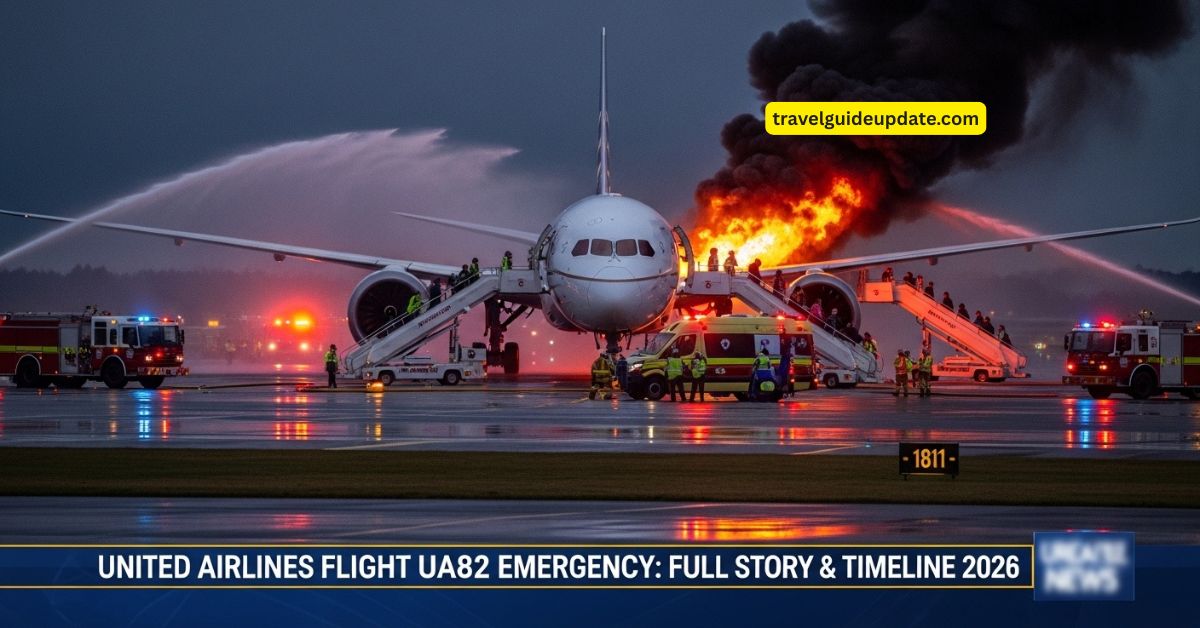
A packed Boeing 787-9 left Newark late at night. It was headed to Delhi. Then, less than an hour into the flight, everything changed. The pilots turned the plane around, declared an emergency, and headed back.
No one was hurt. But many people had questions.
What went wrong? Why did they turn back? What does “Squawk 7700” mean? And what should you do if this ever happens on your flight?
This guide covers it all — the facts, the timeline, the cause, and what it means for you as a traveler.
Key Facts at a Glance
| Detail | Information |
|---|---|
| Flight Number | United Airlines UA82 |
| Aircraft | Boeing 787-9 Dreamliner |
| Registration | N23983 |
| Route | Newark (EWR) → New Delhi (DEL) |
| Distance (Full Route) | ~7,300 miles |
| Departure Time | 9:21–9:30 PM EDT |
| Emergency Declared | ~45–60 minutes after takeoff |
| Altitude at Turn | 33,000 feet (FL330) |
| Location of Turn | Over Gulf of Maine |
| Cause | Electronics cooling system fault |
| Emergency Code | Squawk 7700 |
| Landing Time | ~11:15 PM (approx. 2 hours after takeoff) |
| Injuries | None |
| Runway Used | 22L, Newark Liberty |
What Is United Airlines Flight UA82?
UA82 is a long-haul route. It runs from Newark Liberty International Airport (EWR) to Indira Gandhi International Airport (DEL) in New Delhi, India.
It is one of United’s key US-India flights. The trip covers about 7,300 miles. In normal conditions, it takes roughly 13 to 14 hours.
The plane used on this route is the Boeing 787-9 Dreamliner. It is a modern, wide-body jet built for long flights over oceans. United uses it often for routes like this one.
What Happened? The Full Timeline?
Here is exactly how the events unfolded, step by step.
Step 1: Normal Takeoff From Newark
Flight UA82 pushed back from the gate at Newark and took off in the evening. Passengers settled in. The cabin crew began their routines. Everything looked fine.
The plane climbed to its cruise altitude of 33,000 feet. This is where jets fly most of the time on long routes.
Step 2: A Fault Warning Appears
About 45 minutes to one hour after takeoff, an automated warning triggered in the cockpit. The aircraft’s electronics cooling system showed a fault.
This is not a small warning. It is what pilots call a “no-go” item for a flight over the ocean.
The system fault code logged was related to what is known as the EE bay cooling system — the electronic equipment bay that keeps the plane’s computers cool.
Step 3: The Pilots Decide to Turn Back
The crew was now flying over the Gulf of Maine. In front of them: 13 more hours over the Atlantic Ocean and remote territories with no airports close by.
The call was clear. Turn back.
The pilots stopped their climb, made a U-turn, and started heading back to Newark. They did not try to continue and “hope for the best.” That is not how trained crews operate.
Step 4: Squawk 7700 Declared
The crew set their transponder to 7700. This is the universal code for a general in-flight emergency.
When air traffic controllers see 7700, they act fast. They clear the airspace. They give the plane top priority. All other traffic moves out of the way.
This code does not mean the plane is falling out of the sky. It means: we have a problem, clear the way, we are coming in now.
Step 5: Fuel Dump Over New Jersey
Before landing, the crew had to get rid of fuel. Why? Because the plane had just taken off fully loaded for a 14-hour trip. A heavy plane needs more runway to stop. It also puts more stress on the landing gear.
The crew circled over New Jersey and burned off the extra fuel. This took time but made the landing much safer.
Step 6: Safe Landing at Newark
At about 11:15 PM, the 787-9 touched down on Runway 22L at Newark. All passengers and crew were safe. No injuries. No panic.
The landing was smooth. Passengers said the crew stayed calm and communicated well throughout.
Step 7: United Airlines Response
Once on the ground, United’s ground teams moved quickly:
- Passengers were met by staff at the gate
- Hotel vouchers were given to those without local homes
- Meal vouchers were provided
- A replacement flight to Delhi was arranged for the following day
- The aircraft was pulled from service for full inspection
Read: HopTraveler.com Review 2026 – Honest Breakdown, Features & Travel Benefits
Why Did the Cooling System Cause an Emergency?
This is the part most news articles skip over. Let us explain it simply.
What Does the Electronics Cooling System Do?
Modern planes like the 787-9 are packed with computers. These computers control:
- Navigation systems
- Flight displays in the cockpit
- Communication tools
- Fuel management
- Cabin pressure systems
- Autopilot functions
All of these computers generate heat — a lot of it. The electronics cooling system keeps that heat under control. Think of it like the cooling fan inside your laptop, but for a plane’s entire “brain.”
What Happens If It Fails?
If the cooling system fails and the computers overheat, pilots can start to lose their digital displays. In the worst case, this leads to what is called a navigation blackout — the pilots lose critical tools they need to fly safely.
Over land, near airports, this is manageable. Over the Atlantic Ocean, hundreds of miles from the nearest airport, it is a very different situation.
That is why this fault code is treated as a “no-go” item. You do not fly a 14-hour ocean crossing with this warning active. Ever.
Was There a Real Danger?
Yes and no. A cooling system fault does not mean the plane was about to crash. The 787-9 has built-in backups for most systems. But the risk was real enough that flying on was not safe.
The crew made the right call. The safety system worked exactly as it was built to work.
The Boeing 787-9 Dreamliner: Is It a Safe Plane?
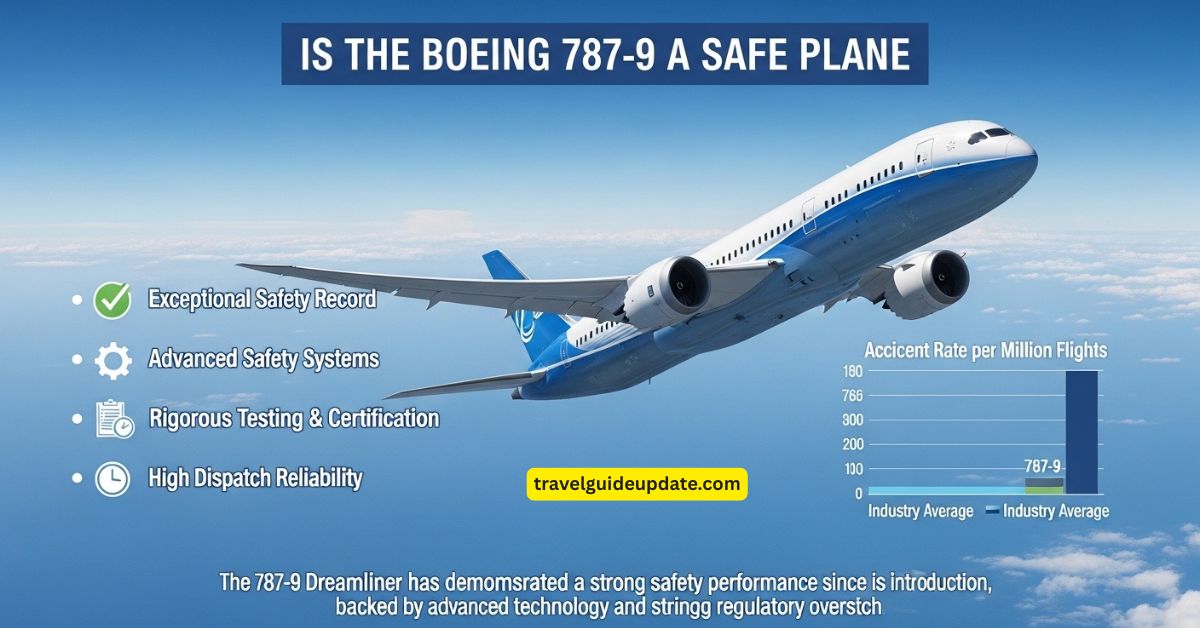
Yes. The 787-9 is one of the most advanced and well-tested aircraft in the world.
Here are some facts about it:
- First flight: 2013
- Built for: Long-haul routes, oceanic crossings
- Fuel efficiency: About 20% more efficient than older similar jets
- Composite materials: Uses carbon fiber, which is lighter and stronger than aluminum
- Safety record: Excellent overall
The specific aircraft in this incident, registration N23983, was delivered to United Airlines in September 2020. It was about 4.8 years old at the time of the incident.
Aviation records show that this same airframe had experienced a separate return-to-origin event on another flight before this one — also on a Newark-to-Delhi leg, also with a technical issue. Both times, the plane returned safely.
This is worth noting: a history of mechanical alerts on one airframe is something the NTSB would likely want to review.
What Is Squawk 7700 — And What Does It Really Mean?
You may have seen this term in news reports. Here is a plain-language breakdown.
The Four Squawk Codes You Should Know
| Code | Meaning |
|---|---|
| 7700 | General emergency — in-flight problem, priority landing needed |
| 7600 | Radio failure — pilots cannot communicate with ATC |
| 7500 | Hijacking — aircraft has been taken over |
| 1200 | Visual flight — normal, no special status |
When pilots set 7700, it tells every radar station on the ground: This plane has a problem. Give it priority. Clear the way.
It is NOT a sign that the plane is doomed. It is a tool that gives the flight the fastest, clearest path back to the runway.
In the UA82 case, the crew maintained the 7700 squawk all the way through final approach and landing. This kept them at the top of the queue the entire time.
What United Airlines Did Right?
It is fair to point out what the airline got right here, because they got a lot of it right.
The Flight Crew
- Caught the fault early, before it could get worse
- Made a fast, clear decision to turn back
- Communicated calmly with passengers throughout
- Followed all standard emergency checklists
- Requested priority landing and got the plane down safely
Passengers reported that the cabin crew stayed composed. There was no alarm, no chaos. A brief announcement was made. The descent was gradual. Most people did not fully realize the scale of the situation until they were back on the ground.
The Airline Response
- Hotel and meal vouchers were provided the same night
- Rebooking was handled quickly
- The aircraft was grounded for inspection right away
- United publicly confirmed the cooling system was the cause
This is the response you want to see from an airline after an incident like this.
What Passengers Did — And What You Should Do?
Let’s be honest. Most passengers do not know what to do in an in-flight emergency. Here is a clear guide.
During the Flight
- Stay seated and buckled. When the seatbelt sign goes on, keep it on.
- Listen to the crew. They are trained for this. Follow their words, not social media rumors.
- Do not film or post. This sounds harsh, but your phone should be on airplane mode. Your focus should be on the crew.
- Stay calm. Panic does not help anyone, including you.
- Ask questions if you need to. Flight attendants can tell you what they are allowed to share.
After Landing
- Do not rush the exit. Follow the crew’s instructions for deplaning.
- Go to the United customer service desk. They will have a rebooking plan ready.
- Get your hotel and meal voucher. You are entitled to these for overnight delays caused by the airline.
- Keep all receipts. If you pay for anything out of pocket, save the receipts for reimbursement.
- Know your rights (see below).
Your Rights as a Passenger After a Flight Diversion
This is a section most articles skip entirely. Let us cover it properly.
What United Is Required to Provide?
When a flight is delayed overnight due to a mechanical fault, airlines are generally required to offer:
- Rebooking on the next available flight to your destination
- Hotel accommodation if you are stranded overnight (for delays caused by the airline)
- Meal vouchers for a reasonable amount
- Transportation to and from the hotel
What You May Be Able to Claim?
Depending on your ticket type, travel insurance, and local laws, you may also be able to claim:
- Compensation for the delay (rules vary by country — EU rules are stricter than US rules)
- Reimbursement for extra expenses caused by the delay
- A full refund if you choose not to travel
What You Need to Do?
- Keep your boarding pass and all travel documents
- Get a written confirmation of the delay reason from United
- File a complaint with the DOT (US Department of Transportation) if your rights are not met
- Contact your travel insurance provider as soon as possible
What the Investigation Could Reveal?
After any incident like this, the NTSB and FAA review the records. Here is what they will likely look at:
- Maintenance logs for aircraft N23983 — especially given the prior return-to-origin event
- The fault code history — how often has this type of cooling fault appeared on this aircraft?
- Boeing’s documentation on the EE bay cooling system
- Whether a fleet-wide check is needed on other 787-9s
This is how aviation safety improves. One incident triggers a review. The review finds a pattern (or rules one out). The result is a safer fleet for everyone.
Is It Still Safe to Fly on a Boeing 787-9?
Yes. Absolutely.
One cooling system fault on one aircraft does not make the 787-9 dangerous. Aviation safety is built on two things: redundancy (backup systems for everything) and early warning (catching problems before they grow).
Both of these worked in the UA82 case. The warning came early. The crew acted on it. Everyone got home safe.
You are statistically far safer on a 787-9 than you are driving to the airport.
Frequently Asked Questions (FAQ)
Was anyone hurt on United Airlines Flight UA82?
No. All passengers and crew landed safely at Newark with zero injuries reported. The landing was smooth and described as routine despite the emergency declaration.
What caused the UA82 emergency?
A fault in the aircraft’s electronics cooling system — specifically the EE bay cooling system. This system keeps the plane’s onboard computers from overheating. Over the ocean, a failure here is treated as a serious risk.
What does Squawk 7700 mean?
It is the universal in-flight emergency transponder code. When a pilot sets 7700, air traffic control gives them top priority. All other traffic clears the airspace. It does not mean the plane is crashing — it means the crew needs immediate priority access to a runway.
Why did the pilots dump fuel before landing?
The plane had just taken off fully loaded for a 14-hour flight. That is a lot of fuel. Landing with that much fuel risks structural damage to the landing gear and needs a much longer runway. Dumping fuel brought the aircraft to a safe landing weight.
Where did the plane turn around?
Over the Gulf of Maine, roughly one hour after departure from Newark.
Did United Airlines give passengers compensation?
Yes. Passengers received hotel vouchers, meal vouchers, and were rebooked on a replacement flight to Delhi the following day.
Is the Boeing 787-9 safe?
Yes. It has an excellent safety record and is one of the most advanced commercial jets in service today. This incident was an isolated mechanical issue that was handled correctly by the crew.
How long was the total delay for passengers?
Passengers were rebooked on the next day’s flight. This means roughly a 24-hour delay from the original scheduled arrival in Delhi.
Could this happen again on the same aircraft?
The aircraft was pulled from service immediately for inspection. United Airlines said it was subject to a “meticulous inspection.” Whether or when it returned to service depends on those maintenance results.
What is a “no-go” item in aviation?
A “no-go” item is a fault or condition that means an aircraft cannot legally or safely continue a flight. Pilots use checklists called MEL (Minimum Equipment Lists) to decide what faults allow flight to continue and which ones require immediate action.
Final Thoughts
The United Airlines Flight UA82 emergency is a story that ends well — and it ends well because the system worked.
The plane’s computers caught the fault. The pilots acted fast. Air traffic control cleared the way. United’s ground teams got everyone into hotels and onto new flights.
No drama. No disaster. Just well-trained people doing their jobs.
Flying is still the safest way to travel. Events like UA82 — as alarming as they sound — are proof of that. The plane turned back not because it was falling apart, but because the safety system said: this is not safe enough for an ocean crossing. And the crew listened.