So you want to know what BackToFrontShow actually costs. Good. You’re in the right place.
This guide covers every plan, every fee, and every way to save money. By the end, you’ll know exactly which plan fits you — and which ones to skip.
No filler. No vague “it depends.” Just the straight facts.
What Is BackToFrontShow?
BackToFrontShow is an analytics and content performance platform. It helps creators, teams, and businesses track how their content performs. You can see who’s watching, when they drop off, and what keeps them coming back.
It’s used by solo creators, small marketing teams, and large companies. The platform scales from basic dashboards all the way to full enterprise analytics.
Think of it like your content’s report card — but updated in real time.
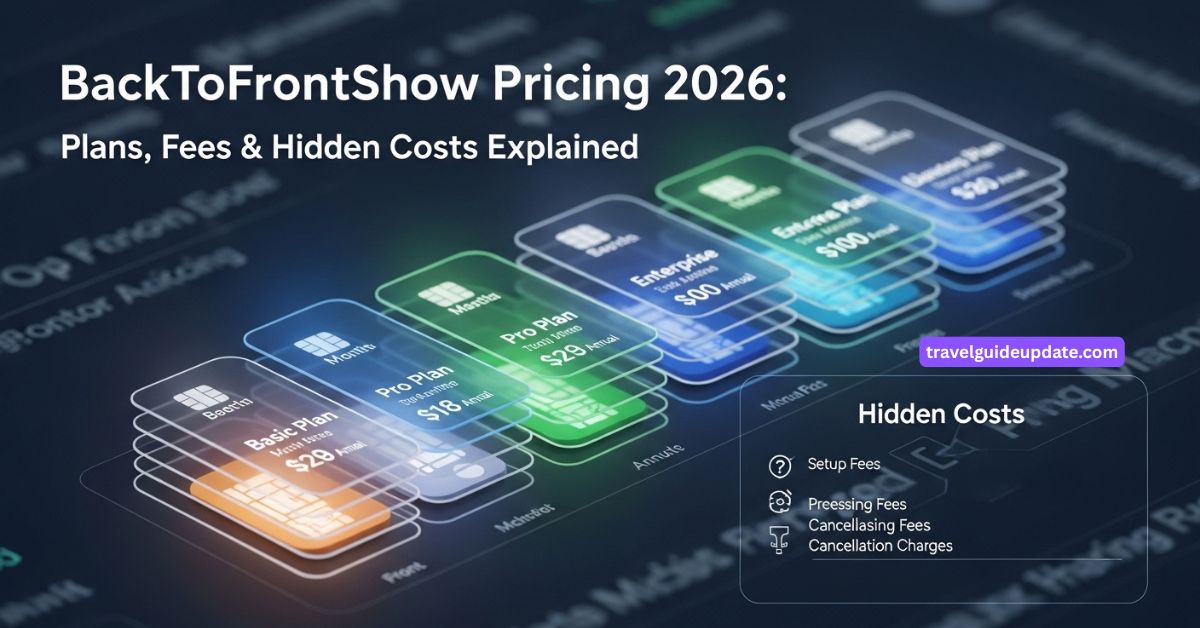
BackToFrontShow Pricing at a Glance
Here’s the fast version before we get into the details.
| Plan | Best For | Billing |
|---|---|---|
| Basic | Solo creators, small teams | Monthly or Annual |
| Pro | Growing teams, multi-dept use | Monthly or Annual |
| Enterprise | Large orgs, complex needs | Custom contracts |
Annual billing saves you 15–25% compared to paying month to month. We’ll cover that more below.
Plan 1: The Basic Plan — Who It’s For and What You Get?
The Basic plan is the starting point. It covers the core stuff. No extras, no frills.
What’s included:
- Standard analytics dashboard
- Basic audience reports (demographics, location, device)
- Limited data storage
- Core integrations (a handful of popular tools)
- Standard customer support (ticket-based)
- Access for a small number of users
Who should pick it:
- Solo creators just getting started
- Small businesses with simple reporting needs
- Teams with fewer than 5 users
- Anyone who wants to test the platform before committing
The honest take: The Basic plan is great if your needs are simple. But if you want real-time data, advanced filters, or team collaboration, you’ll hit its ceiling fast. Start here, but plan to upgrade.
Estimated cost: Around $1,200/month (based on publicly available data from third-party sources). Annual billing brings this down meaningfully.
Plan 2: The Pro Plan — Where Most Teams Land?
The Pro plan is the sweet spot for most businesses. It’s where you get the tools to actually grow.
What’s included over Basic:
- Advanced analytics and dashboards
- AI-based sentiment analysis
- Real-time data access
- Device-level tracking
- Broader integrations (CRM, email, ad platforms, etc.)
- Multi-team access and collaboration tools
- Enhanced security settings
- Priority support
Who should pick it:
- Teams with 5–50 users
- Marketing, sales, and ops teams working from shared data
- Businesses that need real-time performance tracking
- Content teams running regular campaigns
The honest take: If you’re running content across multiple channels and need your whole team on the same data, this is the plan. The jump from Basic to Pro is significant — both in cost and in what you can do.
Plan 3: The Enterprise Plan — For Large-Scale Operations
Enterprise pricing is custom. There’s no fixed number on the website. You talk to their sales team and get a quote based on your needs.
What’s typically included:
- Organization-wide user access
- Custom dashboards built to your brand and workflow
- High-volume data storage and processing
- Advanced security, governance, and compliance tools
- Custom integrations (ERP, proprietary systems, etc.)
- Dedicated account manager
- Premium support with fast response times
- Contract flexibility
Who should pick it:
- Companies with 100+ users
- Industries with strict data compliance needs (healthcare, finance, etc.)
- Businesses operating across multiple regions or departments
- Teams that need custom analytics workflows
The honest take: Don’t guess at Enterprise pricing. Call their team, explain your needs, and negotiate. You can often get a better deal than the first quote.
BackToFrontShow Pricing: Full Feature Comparison Table
| Feature | Basic | Pro | Enterprise |
|---|---|---|---|
| User Access | Small team | Multi-team | Org-wide |
| Dashboard Type | Standard | Advanced | Custom |
| Data Storage | Entry-level | Expanded | High-volume |
| Real-Time Data | No | Yes | Yes |
| AI Analytics | No | Yes | Yes |
| Integrations | Core (few) | Extended | Custom |
| Security Level | Standard | Enhanced | Enterprise-grade |
| Support | Standard tickets | Priority | Dedicated manager |
| Billing Options | Monthly/Annual | Monthly/Annual | Custom contracts |
| Custom Branding | No | Limited | Yes |
Monthly vs. Annual Billing: What’s the Smart Move?
Most users go monthly at first. That makes sense — you’re not locked in, and you can cancel anytime.
But if you know you’ll use the platform for at least 6 months, go annual.
Here’s why:
- Annual plans typically save you 15% to 25% vs monthly
- You lock in the current rate (prices tend to go up over time)
- You get better budget predictability
- Some features or perks are only available on annual plans
One warning: Annual plans are usually non-refundable or only partially refundable. Make sure you’ve tested the platform first before committing to 12 months.
Hidden Fees You Need to Know About
This is the part most pricing guides skip. Here’s what can quietly raise your bill:
1. Overage charges If you go over your data storage or user limit, you pay extra. Know your limits before you hit them.
2. Add-on features Some features — like advanced exports, extra integrations, or white-labeling — cost extra on lower tiers.
3. Onboarding and setup fees Enterprise plans sometimes come with a one-time setup or onboarding fee. Ask upfront.
4. Extra integrations Connecting to non-standard tools (like a niche CRM or legacy system) may cost extra.
5. Service and processing fees At checkout, you may see taxes, payment processing fees, or service charges added on top of the listed price.
The fix: Before you buy, ask for a full cost breakdown in writing. Don’t just rely on the price you see on the pricing page.
6 Ways to Lower Your BackToFrontShow Bill
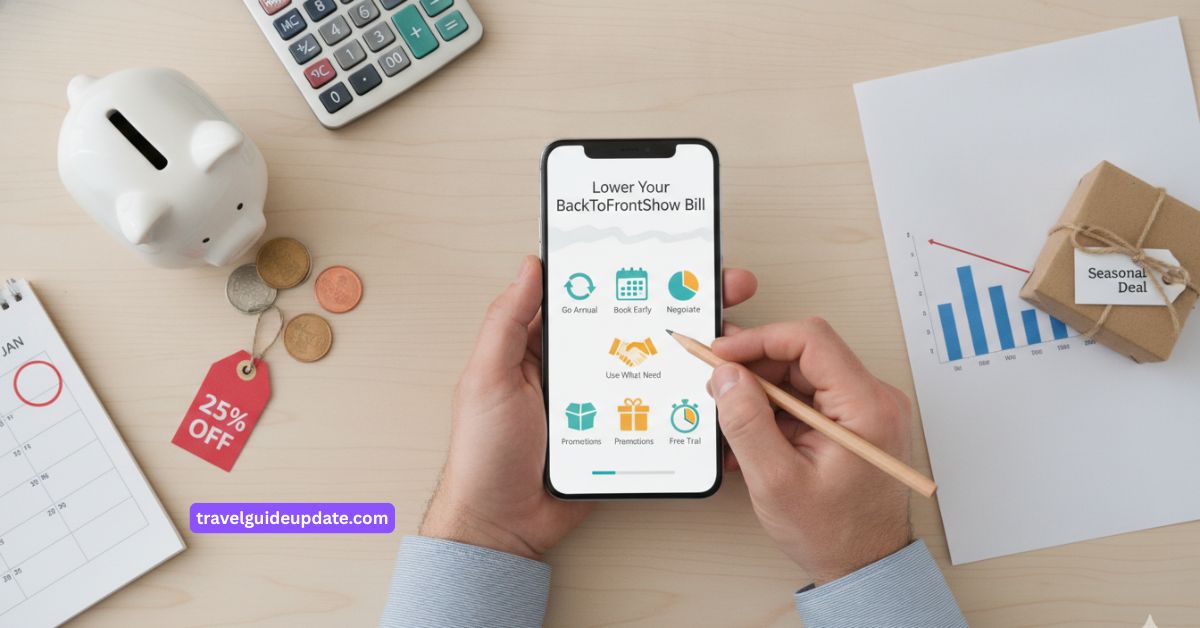
You don’t have to pay full price. Here are real ways to spend less:
1. Go annual As we covered above, this alone saves 15–25%.
2. Book early New features or plan launches often come with early-bird discounts.
3. Negotiate on Enterprise Enterprise pricing is not fixed. Push for a better deal, especially if you’re a large buyer.
4. Use only what you need Don’t buy the Pro plan if the Basic covers your actual needs. Audit what you use every quarter.
5. Watch for promotions BackToFrontShow (and similar platforms) run seasonal deals — especially at year-end and Q1.
6. Try the free trial first If a trial is available, use it fully. Test every feature you think you need before picking a paid plan.
What Affects Your BackToFrontShow Pricing the Most?
Your final cost depends on more than just the plan you pick. Here are the six big factors:
1. Number of Users
More users = higher cost. Most plans charge per seat or per user tier. Audit who actually needs access vs. who’s just “nice to have.”
2. Data Volume
The more data you process and store, the more you may pay. High-traffic content creators and large businesses generate a lot of data fast.
3. Analytics Complexity
Basic reports cost less to run than AI models, real-time feeds, or predictive dashboards. The more complex your setup, the higher your tier needs to be.
4. Support Level
Standard support is included in all plans. But if you need fast response times, a dedicated account manager, or phone support — that costs more.
5. Integrations
Connecting to third-party tools adds value but can add cost. Native integrations are usually included. Custom or niche integrations may not be.
6. Real-Time vs. Scheduled Reporting
Real-time data access requires more computing resources. It’s available on Pro and Enterprise. If you only need daily or weekly reports, Basic may be enough.
Is BackToFrontShow Worth the Price? An Honest Look
Here’s the straight answer: it depends on how you use it.
If you’re a solo creator who posts once a week, the Basic plan may be more than enough. The cost is predictable, and you’ll get useful data without overpaying.
If you’re a growing team running campaigns across channels, the Pro plan pays for itself. Better data means better decisions. Better decisions mean better results.
If you’re an enterprise, the custom plan is the only option that scales properly. The dedicated support alone can save you hours of downtime and confusion.
The bottom line: Don’t pick a plan based on what sounds impressive. Pick it based on how many users you have, how much data you generate, and how complex your reporting needs are.
How to Sign Up and What to Expect?
The process is simple:
- Pick a plan — Basic, Pro, or Enterprise
- Create an account — standard sign-up flow
- Choose your billing — monthly or annual
- Pay — credit card, digital payment, or invoice (Enterprise)
- Get access — most plans activate instantly
For Enterprise, you’ll go through a sales call first. Expect the process to take a few days to a week depending on the complexity of your setup.
Cancellation and Refund Policy
Monthly plans: Cancel anytime from your account dashboard. Your access stays active until the end of the current billing period.
Annual plans: These are typically non-refundable or only partially refundable depending on when you cancel. Always check the exact terms before buying an annual plan.
Enterprise: Cancellation terms are part of your contract. Read the contract carefully before signing.
Pro tip: If you want a refund and the platform says no, try reaching out to customer support directly. Many SaaS companies will make an exception for early cancellations, especially if you haven’t used the service much.
How BackToFrontShow Compares to Similar Platforms?
BackToFrontShow sits in the mid-to-premium range of analytics tools. Here’s a general picture:
| Comparison Point | BackToFrontShow | Lower-Cost Tools | Premium Alternatives |
|---|---|---|---|
| Entry Price | Mid-range | Lower | Higher |
| Real-Time Data | From Pro tier | Often limited | Yes, at all tiers |
| AI Analytics | Yes (Pro+) | Rarely | Yes |
| Ease of Use | Good | Varies | Often complex |
| Enterprise Support | Strong | Limited | Strong |
| Customization | Good | Low | High |
The key advantage of BackToFrontShow is that real-time analytics are built into the core tiers — not locked behind expensive add-ons. That’s a genuine differentiator.
FAQs: BackToFrontShow Pricing
Q: Does BackToFrontShow have a free plan? There’s no permanent free plan, but a free trial may be available. Check the current sign-up page for the latest offer.
Q: Can I switch plans mid-year? Yes. You can upgrade at any time. You pay the difference between your current and new plan. Downgrading may take effect at the next billing cycle.
Q: Is there a student or nonprofit discount? This varies. Contact their support team directly to ask about special pricing.
Q: How many users can I add on the Basic plan? Basic plans typically limit you to a small number of seats. If your team is growing, check the user limit before you pick Basic.
Q: What happens if I go over my data limit? You’ll typically be charged an overage fee. Some plans pause data collection until you upgrade. Know your limit upfront.
Q: Do I need a credit card to try the platform? Depends on the current trial offer. Some trials require a card; some don’t. Check at sign-up.
Q: Can I get a custom quote for a mid-sized team? Yes. If Pro feels too big and Basic too small, reach out to their sales team. Some platforms offer custom mid-tier options that aren’t listed publicly.
Q: How secure is the platform? Security scales with your plan. Enterprise plans include advanced governance and compliance tools. Basic plans offer standard security.
Q: Is there a setup fee? Usually not for Basic and Pro. Enterprise plans may include an onboarding fee. Ask before signing.
Q: What payment methods are accepted? Most plans accept major credit cards. Enterprise plans often support invoicing and bank transfers.