There is something about turquoise water that stops you in your tracks.
It’s not just pretty. It feels like a reset. The stress fades. You breathe slower. You feel light.
That’s why so many people dream of a luxury turquoise holiday. Not just any beach trip — a real escape. One with clear water, great food, total calm, and no corners cut.
This guide gives you everything you need to plan one. We cover the best spots, smart booking tips, what to budget, how to stay green, and much more than the other guides miss.
What Makes a Luxury Turquoise Holiday Different?
Not every beach trip is a luxury turquoise holiday. So what sets them apart?
Three things: the water, the service, and the detail.
The water must be truly clear. Not “nice blue” — we mean the kind where you can see the sand 10 feet down. Where fish swim past your ankles. Where the color shifts from pale mint to deep cobalt as you look out.
The service must feel personal. Not just polite — actually personal. Staff who know your name. A chef who asks what you don’t eat. A room set up just how you like it.
And the detail must be right. The right pillow. Fresh flowers. A cold towel after a swim. A sunset drink that shows up exactly when you want it.
That’s the difference.
What a Luxury Turquoise Holiday Is Not?
It’s not just an expensive hotel by the sea. Plenty of those exist. But a five-star room next to murky water isn’t a turquoise holiday.
It’s also not about showing off. The best luxury holidays are quiet. Private. Unhurried.
You’re not there to be seen. You’re there to feel good.
Top Destinations for a Luxury Turquoise Holiday
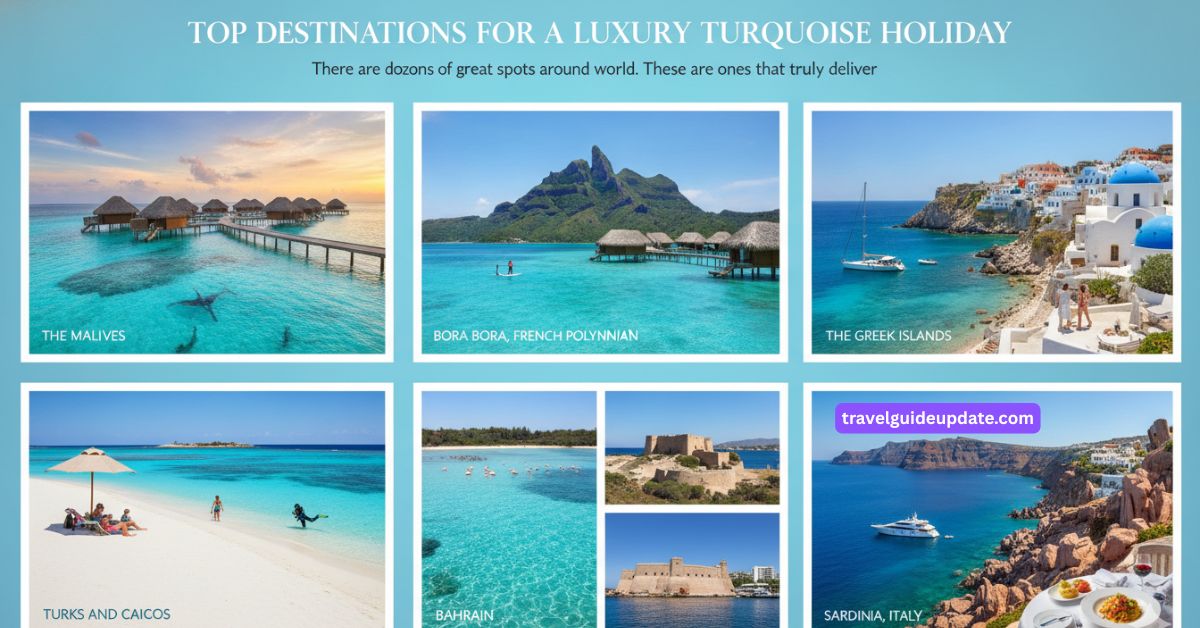
There are dozens of great spots around the world. These are the ones that truly deliver.
The Maldives — The Classic Choice
The Maldives sits in the Indian Ocean, southwest of India. It’s made up of over 1,000 small islands. Most luxury resorts sit on their own private island.
This means you get the whole beach to yourself (or close to it).
The water here is some of the clearest on Earth. Visibility underwater can reach 30 metres on a good day. You’ll see manta rays, reef sharks, sea turtles, and hundreds of fish species without even trying hard.
Best for: Couples, honeymoons, total seclusion. Best time to go: November to April (dry season). Average luxury resort cost: $800–$3,000+ per night.
Bora Bora, French Polynesia — The Romantic Icon
Bora Bora is the one people picture when they close their eyes and dream. A volcanic mountain rising from a lagoon ringed by reef. Overwater bungalows stretching out over water so clear it glows.
It’s smaller than the Maldives. Fewer resorts. But that’s the point. It feels intimate.
The lagoon is calm, warm, and stunning. You can snorkel, paddleboard, or just float on your back and stare at the sky.
Best for: Romance, photography, water sports. Best time to go: May to October (dry season). Average luxury resort cost: $700–$2,500+ per night.
The Greek Islands — Europe’s Blue Dream
If you want turquoise water without a 12-hour flight, the Greek Islands are hard to beat.
Mykonos has a lively energy and beautiful coves. Santorini has dramatic cliffs and that famous blue-and-white look. But for the best water, consider lesser-known gems like Milos, Kefalonia, or Lefkada.
These quieter islands have beaches that rival anything in the tropics — and you can pair them with great food, ancient history, and easy island-hopping.
Best for: Culture-seekers, foodies, those new to luxury travel. Best time to go: May to June or September to October (less crowded, still warm). Average luxury villa/hotel cost: $300–$1,500+ per night.
Turks and Caicos — The Caribbean’s Best-Kept Secret
Grace Bay in Turks and Caicos is consistently voted one of the best beaches in the world. The sand is powder-soft. The water is absurdly blue.
Unlike some Caribbean islands, Turks and Caicos feels uncrowded. It’s small, calm, and focused on real luxury — not nightlife or big resorts.
Great for snorkeling, diving, and doing absolutely nothing.
Best for: Beach purists, families, divers. Best time to go: December to April. Average luxury resort cost: $500–$2,000+ per night.
Bahrain — The Middle East’s Rising Star
Bahrain doesn’t often show up on turquoise holiday lists. It should.
This island nation in the Arabian Gulf has warm, clear waters — and a unique mix of ancient culture and modern luxury. You can dive off pristine reefs in the morning and explore a 4,000-year-old fort in the afternoon.
Top resorts here offer private beaches, spa facilities, and world-class dining. The Hawar Islands — a protected nature reserve — have some of the clearest water in the Gulf. You might spot dolphins, dugongs, or flamingos.
The bonus? Far fewer tourists than the Maldives, and shorter flights from Europe and Asia.
Best for: Culture and nature lovers, off-the-beaten-path luxury. Best time to go: October to April (comfortable temperatures). Average luxury resort cost: $200–$800+ per night.
Sardinia, Italy — Underrated European Gem
Sardinia’s Costa Smeralda (Emerald Coast) has water that genuinely rivals the Maldives in color. It’s not as warm, but it’s stunning.
Steep cliffs. Pink granite rocks. Water that shifts from pale aqua to deep sapphire.
High-end villas and small boutique hotels cluster along the coast. The food is exceptional. And you’re in Italy — so the wine, the pasta, and the general beauty of life are all part of the deal.
Best for: Those who want Europe’s best water with great food and style. Best time to go: June to September. Average luxury villa/hotel cost: $400–$2,000+ per night.
Destination Comparison Table
| Destination | Water Clarity | Best Season | Avg. Luxury Cost/Night | Best For |
|---|---|---|---|---|
| Maldives | ★★★★★ | Nov–Apr | $800–$3,000+ | Seclusion, couples |
| Bora Bora | ★★★★★ | May–Oct | $700–$2,500+ | Romance, photos |
| Turks & Caicos | ★★★★★ | Dec–Apr | $500–$2,000+ | Beaches, diving |
| Bahrain | ★★★★☆ | Oct–Apr | $200–$800+ | Culture, nature |
| Greek Islands | ★★★★☆ | May–Oct | $300–$1,500+ | History, food |
| Sardinia | ★★★★☆ | Jun–Sep | $400–$2,000+ | Style, cuisine |
How to Build Your Perfect Turquoise Holiday
Planning is everything. A great trip doesn’t happen by accident.
Step 1: Decide What Matters Most to You
Before you pick a destination, be honest about what you want.
- Do you want total peace and quiet? → Maldives or Bora Bora.
- Do you want culture alongside the beach? → Greek Islands or Bahrain.
- Do you want European ease without a long flight? → Sardinia or Greece.
- Do you want the best beach, full stop? → Turks and Caicos.
Your answers shape everything else.
Step 2: Choose Your Accommodation Type
There are a few main types to consider:
Overwater bungalows — You sleep literally above the sea. Direct ladder into the water. Total privacy. Best in Maldives and Bora Bora.
Private beachfront villas — Your own stretch of sand. Private pool. Ideal for families or groups who want space.
Boutique resort rooms — Smaller, more personal. Often better service than huge hotels. Great if you want that “home away from home” feel.
Exclusive estate rentals — Rent an entire property. Staff, chef, pool, beach — all yours. Best for big celebrations or total privacy.
Step 3: Plan Your Days (But Not Too Much)
Luxury holidays work best with a light structure. Know what you want to try — but leave gaps for spontaneous naps, long lunches, and unexpected swims.
A good balance looks like this:
- 1–2 planned activities per day (diving, a boat trip, a spa session).
- Long, slow mornings with no agenda.
- At least one sunset you watch from start to finish.
- One night out at a restaurant that makes you feel special.
Step 4: Book at the Right Time
This is where people often go wrong. They wait too long.
For the Maldives and Caribbean, book 6–12 months ahead for peak season. The best overwater villas sell out fast.
For Europe (Greece, Sardinia), you can sometimes book 3–4 months ahead and still get great options — but earlier is always better for top properties.
Early booking also means better rates. Many luxury resorts offer 10–20% discounts for early reservations.
How Much Does a Luxury Turquoise Holiday Actually Cost?
The competitor article gives a rough range. We’re going deeper.
Here’s a realistic breakdown for a 7-night luxury turquoise holiday for two:
| Item | Budget Range |
|---|---|
| Flights (return, long-haul) | $1,000–$5,000 per person |
| Accommodation (7 nights) | $5,000–$21,000+ |
| Dining (some meals outside hotel) | $500–$2,000 |
| Activities & excursions | $500–$3,000 |
| Spa & wellness | $200–$1,500 |
| Tips & incidentals | $200–$500 |
| Total (for two) | $8,000–$55,000+ |
The range is wide because luxury is personal. Two people can have an extraordinary week in Bahrain for $8,000–$12,000. The same week in a private Maldives villa could cost $50,000.
Neither is wrong. It depends on what feels special to you.
Ways to get more value:
- Travel shoulder season (one month before or after peak).
- Book a room category below the top tier — the difference in experience is often small.
- Use a specialist travel advisor. They get room upgrades, spa credits, and perks you can’t book yourself.
Eco-Friendly Luxury — How to Travel Without the Guilt?
This is something most luxury travel guides skip over. We’re not going to.
The places with the most beautiful water are often the most fragile. Coral reefs are under pressure. Marine life is stressed by tourism. If you love these places, you want to protect them.
Here’s how to do that without giving up comfort:
Pick resorts with real eco commitments. Not just nice words on their website. Look for actual programmes: coral planting, solar energy, water recycling, plastic-free policies.
Use reef-safe sunscreen. Regular sunscreen contains chemicals that damage coral. Choose mineral-based sunscreen (zinc oxide or titanium dioxide). It’s better for your skin too.
Skip single-use plastics. Bring a reusable water bottle. Say no to plastic straws. Most good luxury resorts now offer glass and bamboo alternatives anyway.
Support marine conservation experiences. Many resorts offer reef-cleaning dives or turtle monitoring programmes. These are genuinely rewarding — and your participation helps.
Offset your flights. Long-haul flights have a real carbon cost. Several trusted programmes let you offset this. It doesn’t fix the problem, but it’s better than nothing.
The good news: the most responsible resorts are often also the best ones. They attract staff who care, guests who care, and they tend to maintain their surroundings better.
What to Pack for a Luxury Turquoise Holiday?
Packing for luxury travel is an art. Less is more. Quality over quantity.
Clothing:
- 3–4 swimwear options (you’ll be in them a lot).
- Light linen or cotton resort wear for days.
- 1–2 elegant outfits for fine dining evenings.
- A light wrap or layer for air-conditioned restaurants.
Sun protection:
- Reef-safe SPF 50+ sunscreen.
- Wide-brim hat (not a baseball cap — this is luxury travel).
- Good quality UV sunglasses.
- UV-protective rash vest if you’re fair-skinned.
Water gear:
- Prescription or high-quality dive mask if you plan to snorkel often.
- Waterproof phone pouch.
- Lightweight waterproof bag for boat trips.
Practical items:
- Portable charger.
- Noise-cancelling headphones (worth their weight on long flights).
- Small first-aid kit: antihistamines, sea-sick tablets, hydration sachets.
- A printed copy of your booking confirmations (phones die).
What to leave behind:
- Heavy jewelry.
- Too many shoes (2 pairs of sandals and one smarter pair is enough).
- Anything you’d be devastated to lose.
The Real Psychology Behind Why Turquoise Water Feels So Good?
There’s actual science behind why you feel better near clear blue water.
Studies in environmental psychology show that blue spaces — the sea, lakes, rivers — reduce stress hormones, lower blood pressure, and improve mood. Researchers call this the “blue mind” effect.
Turquoise water takes this further. The color turquoise triggers associations with clarity, calm, and openness. It’s linked to the kind of slow, clear thinking you can’t get at a desk.
Combined with the sound of waves, warm sun, and a lack of schedules — your nervous system genuinely starts to relax in a way it rarely does at home.
This is why you come home from a turquoise holiday feeling like you’ve actually rested. Not just slept more — but properly restored.
Should You Use a Luxury Travel Advisor?
Short answer: yes, for high-end trips.
A good luxury travel advisor doesn’t just save you time. They get you things money alone can’t buy.
- Room upgrades on arrival.
- Complimentary breakfast included.
- Early check-in and late check-out.
- A welcome amenity (champagne, fruit, flowers).
- Access to resorts that don’t take direct bookings.
They also handle problems. If a connection gets missed, they fix it. If a resort room isn’t right, they move you. You’re never on hold with a call centre.
Their fee is usually covered by the added value they provide. Often you spend less, and get more.
For a holiday costing $10,000 or more, using a specialist is simply smart.
Cultural Tips for Popular Turquoise Destinations
Understanding local customs makes your trip richer — and more respectful.
Maldives: The Maldives is a Muslim country. On resort islands, normal holidaymaker rules apply. But if you visit a local island (highly recommended), dress modestly. No alcohol outside resorts. Show respect at mosques.
Bahrain: Similar rules. Cover shoulders and knees when visiting souqs, forts, or mosques. During Ramadan, avoid eating or drinking in public during daylight hours. Locals are warm and welcoming — a little respect goes a very long way.
Greek Islands: Casual but not careless. Swimwear is for the beach, not the shops. Learn a few Greek words (kalimera = good morning, efharisto = thank you). Greeks genuinely appreciate the effort.
Bora Bora: French Polynesia has a mix of French and Polynesian culture. The pace is slow — don’t rush it. Tipping is not traditional (unlike in the USA), so don’t feel obligated.
Turks and Caicos: Casual and friendly. Tipping is expected at restaurants (15–20%). The locals are Turks and Caicos Islanders (Belongers) — be respectful of their home, not just their beaches.
Frequently Asked Questions
How far in advance should I book a luxury turquoise holiday? For peak season in the Maldives or Caribbean, book 6–12 months ahead. For European destinations like Greece or Sardinia, 3–6 months is usually fine. The best villas and overwater bungalows sell out fastest.
What’s the cheapest month to book a luxury turquoise holiday? Shoulder seasons offer the best value. For the Maldives, May and October sit between peak and monsoon — rates drop and it’s still beautiful. For the Caribbean, May through June. For Greece, May and September.
Are luxury turquoise holidays good for families? Yes. Many top resorts offer family villas, kids’ clubs, and shallow-water activities. Turks and Caicos and the Greek Islands are especially family-friendly. The Maldives works well for families with older children.
What’s the best type of room for a turquoise holiday experience? Overwater bungalows offer the most direct connection to the water. But beachfront villas often give more space, better privacy, and easier access if you have young children or dislike the exposed feeling of being over the water.
Can I have a luxury turquoise holiday without flying long-haul? Yes. The Greek Islands, Sardinia, Croatian coast, and parts of southern Turkey all offer stunning turquoise water with short flights from Europe. Bahrain is also closer than most people assume — just 6–7 hours from London.
What’s the difference between turquoise holidays and regular beach breaks? A regular beach holiday is about sun and sand. A turquoise holiday is specifically about extraordinary water clarity — the kind that changes how you feel. Add luxury service and bespoke experiences, and you’re in a different category altogether.
Do I need to be a strong swimmer to enjoy a turquoise holiday? Not at all. Most of the best turquoise destinations have calm, shallow lagoons. Snorkelling in calm, clear water is easy even for beginners. Many resorts offer lessons and guided experiences that require no prior skills.
How do I find a genuinely eco-friendly luxury resort? Look for independent certifications like EarthCheck or Green Globe. Read the resort’s sustainability page carefully — look for specific actions, not just promises. Trip Advisor and specialist travel advisors can also recommend verified green properties.
What if I want luxury without the big price tag? Consider Bahrain, parts of Greece, or shoulder-season travel in any destination. A luxury boutique hotel is often just as satisfying as a private island resort — sometimes more so, because the service is more personal.
Is travel insurance worth it for a luxury turquoise holiday? Always. For a trip costing $10,000+, comprehensive travel insurance is not optional. Make sure your policy covers trip cancellation, medical evacuation, and the full value of your trip. Specialist luxury travel insurance is worth the extra cost.
Final Thought
A luxury turquoise holiday isn’t just a treat. For many people, it’s the best thing they do all year.
The water resets you. The service makes you feel looked after. The beauty reminds you why the world is worth exploring.
You don’t have to spend $50,000 to have an extraordinary trip. You just need to plan well, pick the right spot for you, and let yourself truly switch off when you get there.