On July 7, 2025, Delta Connection flight DL3543 took off from Minneapolis. It never made it to Chicago. Just 10 minutes into the flight, the crew turned the plane around and declared an emergency. Every passenger on board had no idea what was about to happen.
Here is everything you need to know about that day — what went wrong, how the crew handled it, and what it all means for you as a traveler.
What Is Delta Connection Flight DL3543?
Delta Connection is not a separate airline. It is a brand used by Delta Air Lines for short regional flights. These flights are often run by smaller partner airlines on Delta’s behalf.
Flight DL3543 was a short route — Minneapolis to Chicago Midway International Airport. It should have taken about one hour. It is a common, routine path flown many times a week.
Key flight details:
| Detail | Info |
|---|---|
| Flight Number | DL3543 |
| Operator | Delta Connection |
| Route | Minneapolis (MSP) → Chicago Midway (MDW) |
| Aircraft | Embraer 170-200LR |
| Tail Number | N259SY |
| Date | July 7, 2025 |
| Departure Time | 13:09 UTC |
What Happened During the DL3543 Emergency?
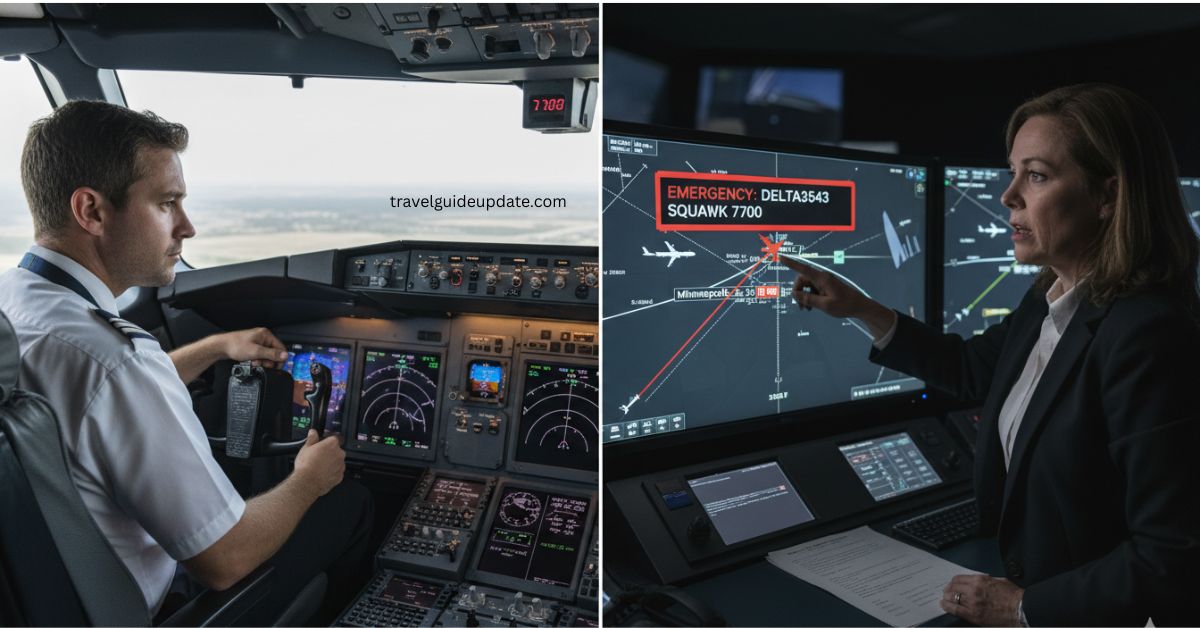
The flight left Minneapolis just after 1 PM UTC. Everything seemed normal at first. The plane climbed to 21,000 feet — that is not even a full cruise altitude. For context, most short flights climb to 28,000–37,000 feet.
Then, the crew stopped climbing. Just 10 minutes after takeoff, they turned the plane around.
The Crew Declared Squawk 7700
This is important. The crew activated what is known as “squawk 7700.” That is a code pilots enter into a device called a transponder. It sends a signal to air traffic control that says: this plane has a general emergency.
When ATC sees squawk 7700, they clear the sky. The plane gets priority. Other planes move out of the way. The flight gets a clear path to land right away.
The Landing
The crew brought the plane back to Minneapolis. They landed safely on runway 12R — just 37 minutes after the original departure. After landing, the aircraft was guided to stand C12.
No injuries were reported.
The Aircraft: Embraer 170-200LR (Tail N259SY)
The plane in question was an Embraer 170-200LR, one of the most common regional jets in the U.S. It is a Brazilian-made jet known for its reliability.
Here is a quick breakdown of that aircraft type:
| Feature | Detail |
|---|---|
| Manufacturer | Embraer (Brazil) |
| Variant | 170-200LR (Long Range) |
| Typical Seating | 70–80 passengers |
| Range | Up to 2,200 nautical miles |
| Engines | 2 × GE CF34-8E |
| First Flight (type) | 2002 |
The “LR” stands for Long Range. These jets are built to fly short to medium routes very efficiently. They are a staple of U.S. regional travel.
The tail number N259SY helps track the exact aircraft. Aviation fans and journalists use this to follow a plane’s full history, service records, and past flights.
Why Did the Plane Turn Back? What We Know
The official cause was not released at the time of the event. The crew chose to return to the departure airport, which is standard practice when something is wrong and you are still close to home base.
This is called a Return to Departure Airport (RTDA). Pilots are trained to do this when:
- A system warning light comes on
- There is unusual vibration or noise
- A pressurization issue starts
- Any mechanical flag requires ground inspection
Stopping the climb at 21,000 feet is a sign. That is lower than normal. The crew likely noticed a problem during the climb phase and acted fast.
What pilots always say: If in doubt, go back. There is no shame in turning around. A safe landing on the ground always beats a risky one far from home.
What Is Squawk 7700 — And Should You Be Scared?
Let’s break this down simply.
Aircraft have a device called a transponder. It sends a code to radar so air traffic control can track the plane. There are three emergency codes:
| Code | Meaning |
|---|---|
| 7700 | General emergency |
| 7600 | Radio failure |
| 7500 | Hijacking |
Squawk 7700 does not mean a crash is coming. It means: we need priority treatment, now. It gets the crew the fastest possible path to a safe landing.
Pilots declare 7700 for many reasons — some minor, some serious. It is a tool, not a death sentence. In fact, the fact that flight DL3543 landed safely 37 minutes after takeoff shows the system works exactly as designed.
How Delta Connection Handled the Crisis?
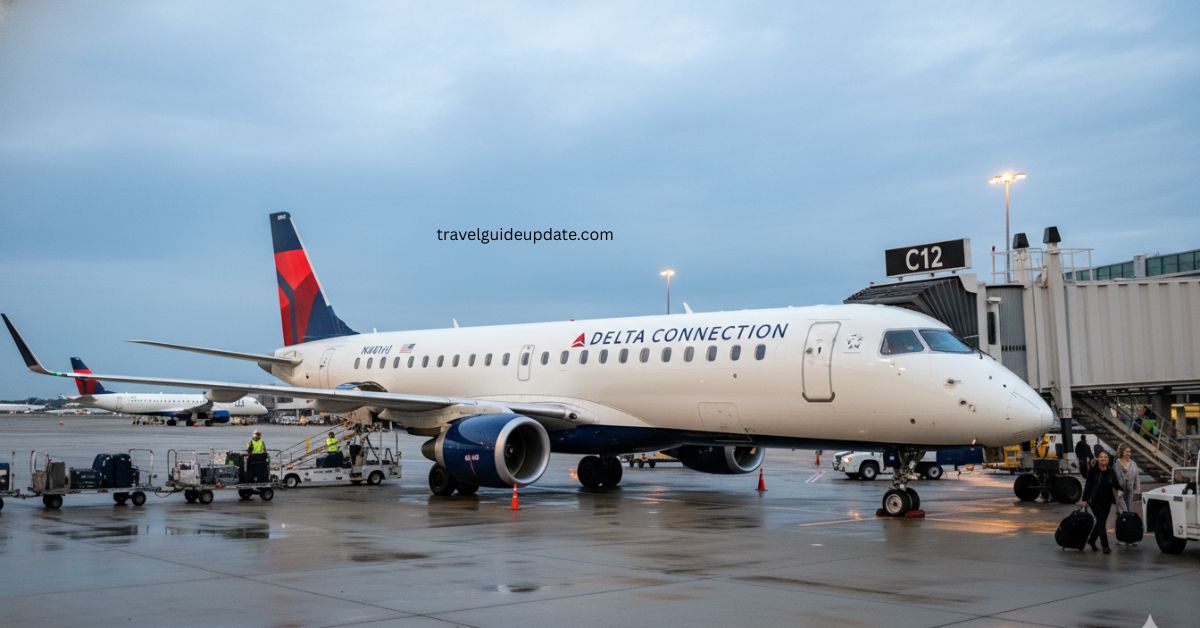
The crew on DL3543 did everything right. They:
- Recognized the problem early (only 10 minutes into flight)
- Stopped the climb before reaching cruise altitude
- Declared the emergency code (squawk 7700) to get priority
- Turned back to the known airport (Minneapolis)
- Landed safely on runway 12R
- Cleared the aircraft to stand C12
This is textbook emergency response. Pilots train for this for hundreds of hours before they ever fly a real plane. Regional jet crews go through the same rigorous training as any other airline pilots.
Delta also has strong communication protocols. Once on the ground, airline staff would have been notified. Passengers would have been re-booked or assisted with connections to Chicago.
What This Means for Passengers on That Day?
If you were on flight DL3543 that day, here is what likely happened to you:
- You felt the plane turn around — a gentle bank and change in direction
- You may not have heard an announcement right away — crews focus on flying first
- The landing likely felt normal — no crash-style landing, just routine
- After landing, gate agents would have assisted with new flight options
Missed connections, rebooking, and delays are frustrating. But everyone on that plane got home safely.
Delta’s customer care in emergency diversions usually includes:
- Rebooking on the next available flight
- Meal vouchers for long delays
- Hotel accommodation if an overnight stay is needed
- Mileage credit or travel credit in some cases
Is Regional Air Travel Safe? The Bigger Picture
Some people read stories like this and wonder: are regional flights safe?
The short answer: yes. Here is the data.
Aviation remains the safest way to travel in the United States by miles traveled. The FAA and NTSB closely monitor all regional operators. Delta Connection partners must follow the same safety rules as mainline Delta flights.
Emergency declarations like squawk 7700 happen more often than most people think. Many are precautionary. The system is built to handle them fast.
What makes regional jets safer than you think?:
- Pilots on regional routes fly the same aircraft type repeatedly — they know it cold
- Maintenance checks happen after every set number of flight hours
- Air traffic control monitors every flight from takeoff to landing
- Modern jets have dozens of backup systems
- The FAA requires regular crew training and checks
The Embraer E170 Fleet: A Safe Aircraft With a Long Track Record
The E170 family has been flying since 2004. It has an excellent safety record. Airlines worldwide use it for regional routes.
Key safety facts about the Embraer E170:
- Designed with dual redundant systems
- High-altitude cabin pressure maintained efficiently
- Used by major U.S. regional operators for over 20 years
- Regular airworthiness checks required by the FAA
- Over 1,000 E-Jets in service globally
The aircraft involved — N259SY — was one of many such jets in Delta’s regional fleet. Nothing about this aircraft type makes it unusual or risky.
What Happens After an Emergency Landing? The Investigation Process
After a flight like DL3543 lands safely following an emergency declaration, the work begins on the ground.
Here is the typical process:
- Maintenance inspection — the aircraft is taken out of service and checked top to bottom
- Crew debrief — pilots and flight attendants report exactly what happened
- FAA notification — depending on the nature of the event, the FAA may be notified
- ASRS report — pilots often file a voluntary NASA Aviation Safety Reporting System form
- Data download — Flight Data Recorder (FDR) data may be reviewed
- Return to service — only after the issue is found and fixed
The aircraft does not fly again until the problem is resolved. This protects every future passenger.
How 2025 Aviation Incidents Changed Industry Safety Protocols?
Flight DL3543 happened in the context of a broader period of aviation scrutiny. Early 2025 saw several high-profile incidents across U.S. airlines.
Industry-wide responses included:
- The FAA increasing oversight of regional jet fleets
- Airlines investing more in predictive maintenance software — tools that flag problems before they cause issues in the air
- Stricter crew resource management (CRM) training, which teaches pilots how to communicate and make decisions under stress
- Regional airports upgrading emergency response teams and equipment
The DL3543 incident, while resolved safely, added to a growing push for transparency in airline operations.
What You Should Know Before Your Next Regional Flight?
Flying soon on a regional connector? Here are a few practical things worth knowing:
- Regional flights are not “lesser” flights — same safety standards as mainlines
- Embraer and Bombardier jets are well-maintained, proven aircraft
- Short flights can have emergency events — but crews handle them fast
- Squawk 7700 is not panic — it is a tool that gets you home safely
- Delta Connection partners go through Delta’s own safety audits
You are in good hands. The crew on DL3543 proved that on July 7, 2025.
Frequently Asked Questions (FAQs)
Q: What caused the DL3543 emergency? The official cause was not released publicly. The crew stopped climbing at 21,000 feet just 10 minutes after departure and returned to Minneapolis. Common reasons for early returns include mechanical warnings, pressurization issues, or system alerts.
Q: Was anyone hurt on flight DL3543? No. All passengers and crew landed safely. No injuries were reported.
Q: What does squawk 7700 mean? It is a transponder code that signals a general emergency to air traffic control. It gives the aircraft priority clearance and clears the path for a fast, safe landing.
Q: Is the Embraer 170 a safe aircraft? Yes. The E170 family has been in service since 2004 and has a strong safety record. It is one of the most widely used regional jets in the world.
Q: How long did the emergency last? Flight DL3543 landed safely just 37 minutes after its original departure — a quick resolution.
Q: Will the aircraft fly again after an emergency like this? Not until a full maintenance inspection is completed and the issue is found and fixed. The FAA requires this before the aircraft returns to service.
Q: What should I do if my flight declares an emergency? Stay calm, follow crew instructions, and remain seated with your seatbelt on. Crews are trained for exactly these situations. Your job is to stay in your seat and listen.
Q: How common are emergency declarations on regional flights? More common than many people think — and most resolve safely. Pilots are trained to declare emergencies early, as a precaution, to get priority handling. It is a sign of good training, not a sign of danger.
Q: Did Delta compensate passengers on DL3543? Delta’s standard policy includes rebooking, meal vouchers, and support for affected travelers. Specific compensation depends on the delay length and circumstances.
Q: What is Delta Connection? It is the regional brand of Delta Air Lines. Flights operate under the Delta name but are run by smaller partner carriers like SkyWest, Endeavor Air, and others. They follow Delta’s safety standards.
Final Thoughts
The Delta Connection DL3543 emergency landing was scary for the people on board. But it ended the way every emergency should — with everyone safe on the ground.
The crew did their job well. The aircraft systems worked. Air traffic control responded fast. And Minneapolis airport was ready.
This is what aviation safety looks like in practice. Not perfect, problem-free skies. But a system built to catch problems early and bring people home safely.
Flying is still the safest way to travel. And DL3543 is proof that the safety systems work.