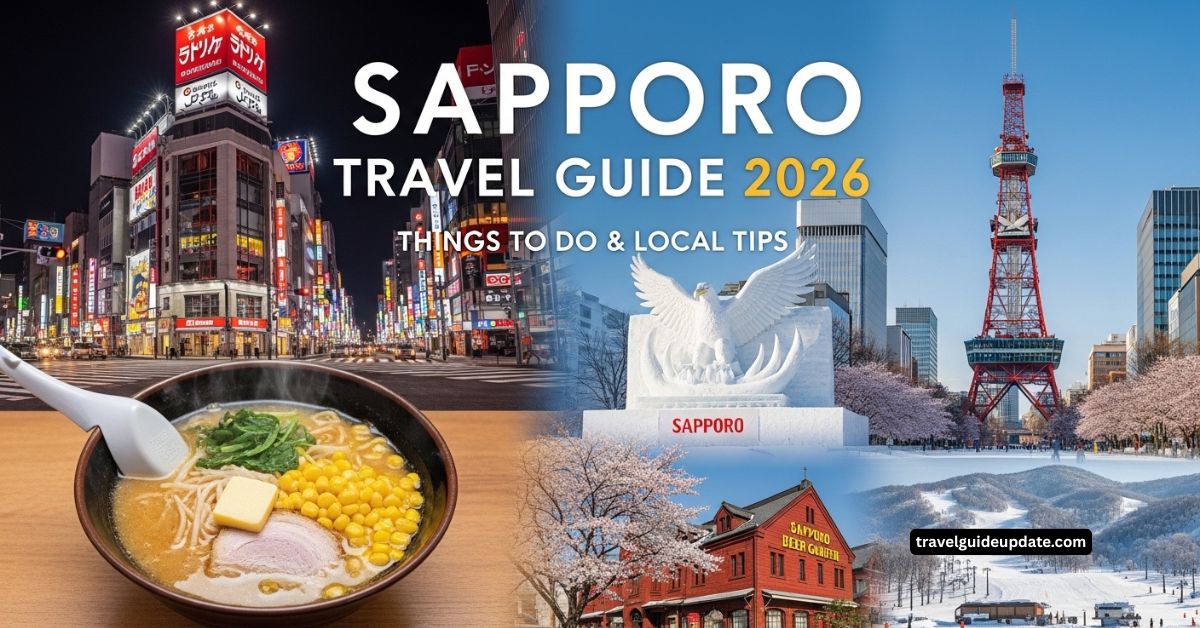
Sapporo is Japan’s fifth-largest city. It sits on the island of Hokkaido in the far north of Japan. Nearly two million people call it home. It hosted the 1972 Winter Olympics — the first in all of Asia.
But Sapporo is more than one big moment in history. It’s a city full of surprises. It has world-class ski slopes, steaming bowls of ramen, fresh seafood, old beer halls, and one of the most famous snow festivals on Earth.
Whether you love winter sports, food, culture, or just good city walks — Sapporo has something for you.
Quick Facts About Sapporo
| Fact | Detail |
|---|---|
| Location | Hokkaido Island, northern Japan |
| Population | ~1.96 million |
| Language | Japanese |
| Currency | Japanese Yen (¥) |
| Time Zone | JST (UTC+9) |
| Best Known For | Snow Festival, ramen, ski resorts, beer |
| Nearest Airport | New Chitose Airport (48 km away) |
| Emergency Number | 119 (ambulance), 110 (police) |
Fun Facts You’ll Want to Share
- The name “Sapporo” comes from an old Ainu phrase meaning “great dry river.”
- About 20% of the city was destroyed in World War II.
- The Sapporo Snow Festival draws over two million visitors every year.
- The city is nicknamed “The City of Ramen.”
- Sapporo is home to the oldest beer brand in Japan.
Best Time to Visit Sapporo
The time you visit changes everything. Sapporo has four very different seasons. Each one offers a completely different experience.
Winter (December – February) — Snow and Festivals
This is peak season. Flights and hotels cost more. But for many visitors, it’s the only time to come.
The Sapporo Snow Festival (early February) is one of the best events in all of Japan. Massive ice sculptures fill Odori Park. Some are as big as buildings.
Ski season is also in full swing. Resorts like Mount Teine and Rusutsu get heavy snowfall and are world-class.
Best for: Skiing, snow festivals, winter nightlife
Spring (March – May) — Cherry Blossoms and Calm
Crowds thin out. Prices drop. The city starts to warm up. Hokkaido Shrine and Maruyama Park burst with pink cherry blossoms in late April and May.
The Sapporo Lilac Festival in May is a lovely outdoor event. It’s one of the nicest times to walk the city with no rush.
Best for: Budget travel, photography, walking tours
Summer (June – August) — Green Parks and Beer Gardens
Summers in Sapporo are cooler than most of Japan. That’s a big plus. While Tokyo bakes, Sapporo stays comfortable.
The Odori Beer Garden pops up every July and August. Locals pour into the park. Long tables, cold beer, and food stalls line the city’s central park.
Best for: Outdoor festivals, sightseeing, food lovers
Autumn (September – November) — Fall Colors
Autumn brings red and gold leaves across Hokkaido. It’s a quieter season but very beautiful.
The Sapporo Autumn Fest in September brings local food, drinks, and crafts to Odori Park.
Best for: Foliage, food festivals, fewer crowds
Festival Calendar at a Glance
| Festival | Month | Location |
|---|---|---|
| Sapporo Snow Festival | February | Odori Park, Susukino |
| Sapporo White Illumination | November–December | Odori Park |
| Hokkaido Shrine Festival | June | Hokkaido Shrine |
| Sapporo Odori Beer Garden | July–August | Odori Park |
| Sapporo Lilac Festival | May | Odori Park |
| Sapporo Autumn Fest | September | Odori Park |
How to Get to Sapporo?
Most visitors fly into New Chitose Airport (CTS) — the main airport for Hokkaido. It’s about 48 km from the city center.
You have three ways to get into town:
By Train (Best Option)
The JR Airport Rapid Train connects the airport to Sapporo Station in about 37 minutes. Trains run every 15 minutes or so.
- Cost: ¥1,150 one way
- Buy tickets: At the station machine or use an IC card (Suica, ICOCA)
- Tip: If you have a Hokkaido Rail Pass, this ride is included.
By Bus
Buses leave from the first floor of the domestic terminal. Look for the red-line routes.
- Bus stands 14 and 22 go to downtown Sapporo
- Bus stands 13 and 20 go east toward Sapporo Beer Garden
- Cost: Around ¥1,030
- Time: About 60–80 minutes depending on traffic
By Taxi
Taxis are at the first floor exit. Fast and easy, but very pricey.
- Cost: Around ¥10,000–¥15,000
- Best for: Groups or heavy luggage travelers
Getting Around Sapporo
Once you’re in the city, getting around is easy. The public transport system is clean, reliable, and cheap.
Subway (Best for Most Visitors)
Sapporo has three subway lines:
| Line | Color | Key Stops |
|---|---|---|
| Nanboku | Green | Odori, Susukino, Nakajima Park |
| Tozai | Orange | Odori, Maruyama Park |
| Toho | Blue | Sapporo Station, Higashi area |
Fares range from ¥200 to ¥370 per ride. A one-day pass costs ¥830. On weekends and holidays, it drops to just ¥520. Well worth it if you’re hopping around.
Note: The green and orange lines have women-only carriages before 9 a.m.
City Bus (100 Yen Bus — Great Deal)
The Toshinnai 100 Yen Bus is a real find. For just ¥100, you can ride through central Sapporo and hop off at major sights, museums, and parks. Buy tickets on the bus or at stations.
Hokkaido Rail Pass (For Wider Exploration)
If you plan to explore the island beyond Sapporo, get the Hokkaido Rail Pass.
| Pass | Price |
|---|---|
| 3-day pass | ¥16,000 |
| 5-day pass | ¥20,000 |
| 7-day pass | ¥24,000 |
Prices subject to change. Check the JR Hokkaido website before you go.
Renting a Car
Car rentals are easy to find at the airport and in the city. This works well in winter if you plan to visit multiple ski resorts. Roads outside the city can be icy, so winter tires are a must.
Best Neighborhoods in Sapporo
Sapporo is easy to explore on foot or by subway. Here are the five areas you’ll spend most of your time in.
Odori Koen — The Heart of the City
Odori Park is a long green stretch that cuts through central Sapporo. It hosts the Snow Festival, Beer Garden, and most of the city’s big events. You’ll always find something going on here.
Don’t miss: Sapporo TV Tower at the east end of the park. The observation deck gives you a great view over the city.
Susukino — Nightlife and Neon
Susukino is Sapporo’s entertainment district. It lights up after dark. You’ll find karaoke bars, restaurants, ramen shops, and live music. It’s safe and busy most nights of the week.
Best time to visit: After 8 p.m.
North of Sapporo Station — History and Culture
This area has Hokkaido University — one of Japan’s most beautiful campuses. It’s open to the public. A free walk through the tree-lined paths is well worth your time. You’ll also find the Sapporo Brewery and Beer Museum nearby.
South of Sapporo Station — Art and Architecture
Botanical Gardens, historic Western-style buildings, and the Hokkaido Museum of Modern Art are all here. The area has a calmer, more refined feel than the rest of the city.
Nakajima Koen — Peace and Green Space
A quiet park neighborhood south of Susukino. Great for morning jogs or calm afternoon walks. The Sapporo Winter Sports Museum is here, as well as the Sapporo Concert Hall.
Top Things to Do in Sapporo
Winter Activities
Sapporo Snow Festival Every February, Odori Park fills with massive snow and ice sculptures. Some are lit up at night. It’s completely free to walk around. One of Japan’s top events — don’t miss it if you’re in town.
Mount Teine Skiing This ski resort was used for the 1972 Winter Olympics. It has runs for all skill levels. The views over the city from the top are stunning.
- 1-day lift pass: Around ¥5,200
- Open: Late November to early April
- How to get there: Bus from Sapporo Station (about 45 min)
Sapporo White Illumination From November through December, Odori Park and the station area glow with thousands of lights. It’s romantic and quiet — a nice contrast to the busy Snow Festival.
Culture and History
Sapporo Beer Museum This is a must-do, even if you don’t drink beer. The red brick building is beautiful. Inside, you’ll learn about how Japan’s oldest beer brand was born right here in Sapporo.
- Admission: Free for the museum tour; tasting costs extra
- Address: 9 Chome-1-1 Kita 7 Johigashi, Sapporo
Sapporo Clock Tower The oldest building in the city. Built in 1878. It’s one of the few Western-style buildings left in Hokkaido. Small but worth a quick visit.
- Admission: ¥200 for adults
- Closed: Mondays
Hokkaido Shrine Sapporo’s most important shrine sits inside a forested park. It’s calm, beautiful, and free. Come in late April for cherry blossoms. The Hokkaido Shrine Festival in mid-June brings traditional music, parades, and stalls.
- Admission: Free
Parks and Outdoors
Odori Park The green spine of the city. Walk it east to west and you’ll pass fountains, seasonal flower beds, cafés, and festival stalls. Free to visit anytime.
Moerenuma Park Designed by Japanese-American sculptor Isamu Noguchi. A huge outdoor art park with hills, fountains, and sculptures. Free to enter.
Maruyama Park Near Hokkaido Shrine. Great for cherry blossoms in spring. Also has sports fields and the Maruyama Zoo.
Moiwa Mountain (Hiking) A short trip from the city center. You can hike or take the ropeway to the top. The night view over Sapporo is one of the best in Hokkaido.
- Ropeway: Around ¥1,800 round trip
Art and Museums
Hokkaido Museum of Modern Art Japanese and international contemporary art in a clean, modern space.
- Admission: ¥510 for adults
Sapporo Art Park An open-air sculpture park with craft workshops and artist studios. Great for a slow afternoon.
Shopping
Tanukikoji Shopping Arcade A covered 1-km shopping street with over 200 shops. Rain or shine, you can browse here all day. Mix of local stores, souvenir shops, and restaurants.
Sapporo JR Station Shopping The station mall is packed with shops and food stalls. Great for last-minute souvenirs before your train or flight.
Nijo Market A small but lively fresh market. Try Hokkaido melon, sea urchin, crab, and local dairy products. One of the freshest food markets in the region.
What to Eat and Drink in Sapporo?
Sapporo has a serious food culture. You don’t need a big budget to eat very well here.
Sapporo Ramen (Must Try)
Sapporo is the birthplace of miso ramen. It’s rich, thick, and warming — perfect for cold Hokkaido nights. You’ll find ramen shops on almost every street.
Where to go:
- Ramen Yokocho (Ramen Alley) in Susukino — a narrow lane packed with tiny ramen shops. Each one has its own recipe. Try a couple.
- Ganso Ramen Yokocho nearby is the older of the two alleys and slightly less touristy.
Hairy Crab (Kegani)
Hokkaido is famous for its seafood. The hairy crab (kegani) is a local specialty. Sweet, delicate meat — usually served boiled and whole. Best eaten fresh from the market.
Where to go:
- Nijo Market — buy it fresh and eat it on the spot
- Sapporo Jyogai Ichiba — looks rough from outside but serves excellent crab
Genghis Khan (Jingisukan)
Lamb grilled on a dome-shaped iron plate with onions and vegetables. This is Hokkaido’s most beloved local dish. Named after Genghis Khan (for reasons nobody fully agrees on). Filling, cheap, and delicious.
Where to go?: Most izakayas (Japanese pubs) in Susukino serve it. Daruma is a popular local chain.
Shiroi Koibito (White Lover Cookies)
The most famous souvenir from Sapporo. Two crispy wafers with white chocolate in the middle. Buy a box at the station or at the Shiroi Koibito Park factory in Nishi Ward — you can even make your own.
Sapporo Beer
Sapporo Lager is Japan’s oldest beer brand, born right here in 1876. The Sapporo Beer Garden near the brewery is where locals gather. You can also do a tasting at the Beer Museum.
Where to Drink?
| Spot | Type | Vibe |
|---|---|---|
| Sapporo Beer Garden | Beer hall | Lively, loud, fun |
| Ramen Yokocho | Street food / drinks | Casual, local |
| The Bow Bar | Whisky bar | Quiet, sophisticated |
| Susukino bars | Karaoke, live music | Energetic nightlife |
Where to Stay in Sapporo?
Budget (Under ¥8,000/night)
- Mercure Hotel Sapporo — Central location, clean rooms, easy subway access. A solid pick for ski trip base camp.
- Various guesthouses near Susukino — Dorm beds available from around ¥3,000.
Mid-Range (¥8,000–¥20,000/night)
- Hotel Monterey Sapporo — Elegant European-style design in the city center. Well-reviewed.
- Cross Hotel Sapporo — Great value, near the Tozai subway line.
Luxury (¥20,000+/night)
- Royton Sapporo — 5-star hotel steps from Odori Park. Polished rooms and excellent service.
- Jozankei Tsuruga Resort Spa Mori no Uta — A true spa resort in the hot spring town of Jozankei, about 30 minutes from the city. Traditional onsen, mountain views, and full Japanese hospitality.
Near Sapporo Dome (For Sports Events)
- Hotel Sulata Sapporo — 4-star modern hotel. About 15 minutes from the dome by car.
3 Things Most Travel Guides Miss About Sapporo
1. Jozankei Hot Springs — The Perfect Day Trip
Just 30 minutes from downtown, the Jozankei Onsen area sits deep in a river valley surrounded by mountains. It’s one of Hokkaido’s best hot spring towns.
In autumn, the foliage here is extraordinary. In winter, you can soak in an outdoor hot spring (rotenburo) while it snows around you. Most ryokan allow day visitors for a bathing fee of ¥1,000–¥2,000.
How to get there: Bus from Sapporo Station (about 60 min, ¥750 one way)
2. Hokkaido University Campus Walk
This is one of the most beautiful things to do in Sapporo — and it’s completely free. The Hokkaido University campus is open to the public year-round.
In autumn, the ginkgo tree avenue turns bright yellow. In summer, the herb garden blooms. It’s a calm escape from the city. Pick up a free campus map at the main gate.
3. Sapporo Curling Rinks (Yes, Really)
Curling is huge in Hokkaido. Japan’s Olympic curling team trains here. Several rinks in the city offer beginner curling lessons to tourists — even if you’ve never held a broom.
Check the Sapporo Curling Stadium for public session schedules.
Practical Tips Before You Go
Money and Payments
- Sapporo is still mostly cash-based, especially at small ramen shops, markets, and local izakayas.
- 7-Eleven ATMs accept foreign cards — easiest way to withdraw yen.
- Exchange money before you leave home for better rates.
Language
- Most signs in central Sapporo are in Japanese and English.
- Google Translate with the camera function works well for menus.
- A few words go a long way. “Sumimasen” (excuse me) and “Arigatou gozaimasu” (thank you) will be warmly received.
Smoking Rules
- Smoking is banned in most public areas in central Sapporo.
- Only allowed in marked designated smoking zones.
Drinking Age
- The legal drinking age is 20 years old.
- Most bars serve until 4 a.m.
Safety
- Sapporo is extremely safe. Violent crime is very rare.
- Keep your wits about you in busy tourist areas (pickpockets can be present at festivals).
- Women traveling alone will feel safe here.
Winter Travel Tips
- Pack waterproof boots with grip. City sidewalks can be icy.
- Layer up — temperatures drop to -10°C (14°F) and below in January.
- Most buildings are very well heated. You’ll be warm inside.
- Snow tires are required on rental cars in winter.
Sapporo Compared to Other Hokkaido Destinations
| Destination | Distance from Sapporo | Best For |
|---|---|---|
| Otaru | 40 km (30 min by train) | Canals, seafood, glass art |
| Noboribetsu | 110 km (1 hr 30 min) | Hot springs, volcanic valley |
| Niseko | 100 km (2 hrs by bus) | World-class skiing |
| Furano | 150 km (2 hrs by car) | Lavender fields (summer) |
| Hakodate | 260 km (2 hrs by shinkansen) | Night views, seafood market |
All of these work as day trips from Sapporo if you have a rail pass or car.
Frequently Asked Questions About Sapporo
How many days do I need in Sapporo? Three days gives you time to see the main sights, try the food, and take one day trip. Five days lets you ski, explore Jozankei, and do things at a slower pace.
Is Sapporo expensive? It’s cheaper than Tokyo. A bowl of ramen costs ¥800–¥1,200. A subway ride is ¥200–¥370. Mid-range hotels run ¥10,000–¥15,000 a night. Budget travelers can get by on ¥5,000–¥7,000 a day.
What is the Sapporo Snow Festival? It’s an annual event held in early February. Giant snow and ice sculptures fill Odori Park and Susukino. It’s completely free to walk around. One of Japan’s most famous winter events.
Is English spoken in Sapporo? Enough to get by. Hotel staff and tourist spots usually have English speakers. In local ramen shops and markets, you may need to point at the menu.
What is Sapporo famous for? Ramen (especially miso ramen), fresh seafood (crab, sea urchin), Sapporo beer, the Snow Festival, and winter skiing.
Is Sapporo worth visiting in summer? Yes. Summer is cooler than the rest of Japan, the beer garden is running, parks are green, and there are fewer tourists than in winter.
Can I do Sapporo as a day trip from Tokyo? Technically yes — about 1.5 hours by flight. But it’s better to stay at least 2–3 nights to experience it properly.
What should I buy as a souvenir from Sapporo? Shiroi Koibito cookies are the classic pick. Also look for Rokkatei confections, fresh Hokkaido butter, and local sake or whisky.
How cold does Sapporo get? January and February average around -4°C to -8°C (24°F to 18°F), with possible drops to -15°C. Heavy snow is common from December to March.
Is Sapporo safe for solo travelers? Very safe. One of the safest cities in Japan. Solo women travelers, in particular, report feeling very comfortable here.