Planning a trip can feel hard. There’s so much to think about. Where do you go? What do you pack? How much will it cost?
That’s where xiangaijiaqi.com travel comes in.
It’s a practical travel resource built for real people. Not fancy bloggers. Not big travel agencies. Just you — a person who wants to plan a good trip without the stress.
In this guide, we’ll cover everything. What the platform offers, how to use its tips, how to plan your trip step by step, and what to do when things go wrong. We’ll also add sections the competitor skipped — like solo travel, budget hacks, and how to stay safe abroad.
Let’s get into it.
What Is xiangaijiaqi.com Travel?
xiangaijiaqi.com is an online platform. It shares clear, simple tips on many topics. Travel is one of its strongest areas.
The travel section gives you:
- Trip planning guides
- Destination ideas
- Packing checklists
- Budget advice
- Safety tips
It’s not a travel agency. You can’t book flights there. But you can learn how to plan better — and that saves you money and stress in the long run.
The site is built for everyone. New travelers. Experienced ones too. The tips are short, clear, and easy to follow.
Why People Trust xiangaijiaqi.com Travel Tips?
There are thousands of travel blogs online. So why does this one stand out?
Here are a few reasons:
- No fluff. The tips are direct. You get the point fast.
- No heavy ads. The focus stays on helping you — not selling to you.
- Easy to read. Short sentences. Clear steps. No travel jargon.
- Covers real problems. Like what to do if you miss a flight or lose your passport.
You get actual help — not just pretty travel photos.
How to Start Your Trip Planning the Right Way?
Most people start planning the wrong way. They search for flights first. Then panic about the cost.
Here’s a better order:
Step 1 — Pick Your Destination
Ask yourself three things:
- What’s my budget?
- How many days do I have?
- What do I want to do — relax, explore, or both?
Short on cash? Look at nearby countries or cities. You don’t need a big flight budget to have a great trip.
Step 2 — Set Your Travel Budget
This is the most skipped step. Don’t skip it.
Write down these costs:
| Cost Type | What to Include |
|---|---|
| Flights | Round trip, taxes, baggage fees |
| Hotel / Stay | Per night x number of nights |
| Food | Daily budget x number of days |
| Transport | Local buses, trains, taxis |
| Activities | Tours, entry fees, excursions |
| Emergency Fund | At least 10–15% of total budget |
Add it all up. Then check if it fits your budget. If not, adjust before you book anything.
Step 3 — Book Smart, Not Fast
Don’t book the first thing you see.
- Use price alerts for flights
- Book hotels with free cancellation when possible
- Travel mid-week for cheaper flights (Tuesday and Wednesday are often cheapest)
- Book early for popular spots — especially in peak season
Step 4 — Make a Loose Itinerary
You don’t need to plan every hour. But you should know:
- Where you’ll sleep each night
- Which activities are must-dos
- Which days are free for exploring
Leave gaps. The best travel moments often happen when you’re not following a schedule.
The xiangaijiaqi.com Packing System: Pack Less, Travel Better
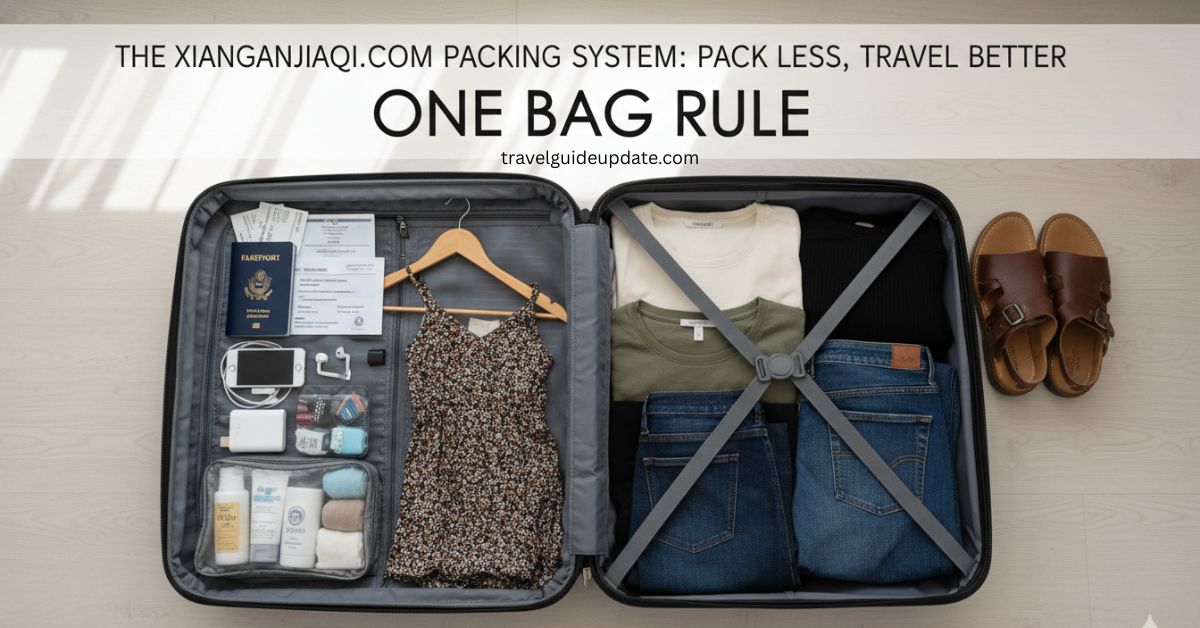
Over-packing is one of the biggest travel mistakes. You end up carrying a heavy bag — and half the stuff never gets used.
Here’s the smart way to pack:
The Core Packing List
Clothes:
- 3–4 tops (neutral colors so they mix and match)
- 2 bottoms (pants or shorts)
- 1 smart outfit (for dinners or events)
- 7 pairs of underwear and socks
- 1 light jacket or layer
- Comfortable walking shoes
- Flip flops or sandals
Toiletries:
- Travel-size items only
- Solid shampoo bars (no liquid rules on flights)
- SPF 30+ sunscreen
- Basic first aid: plasters, painkillers, antidiarrheal tablets
Tech:
- Phone + charger
- Universal adapter
- Portable power bank
- Earbuds
Documents:
- Passport (check it’s valid for 6 months after your return date)
- Visa if needed
- Travel insurance details (print and digital copy)
- Hotel booking confirmations
One Bag Rule
Try to fit everything in one carry-on bag. This saves you:
- Baggage fees (can be $30–$60 per trip each way)
- Time at the airport (no waiting at baggage claim)
- Stress (your bag can’t get lost if it’s with you)
Budget Travel Tips You Won’t Find Everywhere
This is one of the areas the competitor skipped. So let’s go deep.
Eat Like a Local
Tourist restaurants near big sights charge 2–3x more. Walk a few streets away. Look for places where locals eat. No English menu outside? That’s usually a good sign.
Budget food tips:
- Eat your big meal at lunch (lunch menus are often cheaper than dinner)
- Buy snacks and drinks at local supermarkets
- Try street food — it’s often the tastiest and cheapest option
- Fill your water bottle instead of buying new bottles
Get Around for Less
Transport is a big part of your travel budget. Here’s how to cut it:
- Use public buses and metro over taxis
- Walk when possible — it’s free and you see more
- Rent a bike in flat cities
- Use ride-share apps to compare prices before you flag down a taxi
- Book overnight trains or buses to save on a night’s accommodation
Find Cheap Places to Stay
Hotels aren’t your only option.
| Stay Type | Best For | Avg Cost |
|---|---|---|
| Hostel dorm | Solo travelers, budget trips | $10–$30/night |
| Private hostel room | Budget + privacy | $25–$60/night |
| Airbnb | Families, longer stays | $40–$120/night |
| Guesthouses | Local feel, off-the-beaten-path | $20–$70/night |
| Budget hotels | Easy, no surprises | $40–$100/night |
Book early. Check reviews. And always look at the cancellation policy before you pay.
Solo Travel with xiangaijiaqi.com Tips: How to Do It Right?
Solo travel is growing fast. More people — especially women — are traveling alone than ever before.
The competitor article didn’t touch this. We will.
Why Solo Travel Is Worth It?
- You go where you want, when you want
- You meet more people (you’re more open when you’re alone)
- You build real confidence
- You learn to solve problems on your own
How to Stay Safe Alone?
Safety is the top worry for solo travelers. Here’s what actually works:
- Tell someone your plan. Share your itinerary with a friend or family member.
- Stay in social places. Hostels and guesthouses in busy areas are safer than isolated rentals.
- Don’t flash expensive gear. Keep your phone in your pocket. Wear simple jewelry.
- Trust your gut. If something feels wrong, leave. You don’t owe anyone an explanation.
- Learn 5–10 words in the local language. “Help,” “thank you,” “where is…?” Go a long way.
- Keep a digital and physical copy of your passport. Email it to yourself too.
Best Destinations for First-Time Solo Travelers
- Japan — very safe, great public transport, easy to navigate
- Portugal — friendly locals, low cost, easy English
- Thailand — well-worn backpacker trail, lots of solo travelers
- New Zealand — safe, English-speaking, stunning nature
- Colombia — warm people, growing infrastructure, budget-friendly
Travel Safety: What to Do When Things Go Wrong?
Every traveler faces problems at some point. The key is knowing what to do before they happen.
If You Lose Your Passport
- Go to your country’s nearest embassy or consulate right away
- File a police report — many embassies need this
- Contact your travel insurance provider
- Get an emergency travel document issued
This is why keeping a photo of your passport in your email is so important.
If You Miss Your Flight
- Go to the airline desk right away — don’t wait
- Ask about the next available flight
- Check if your travel insurance covers this
- If the airline caused the delay, they may owe you a replacement flight
If You Get Sick Abroad
- Find the nearest pharmacy first for mild issues
- For serious illness, go to a hospital and show your travel insurance card
- Keep your insurance emergency number saved in your phone
- Drink bottled or filtered water in countries where tap water isn’t safe
If Your Card Gets Blocked
- Always carry a small amount of local cash as backup
- Have two cards — keep them in different places
- Tell your bank before you travel (many block cards if they see foreign charges)
How to Use xiangaijiaqi.com Travel Tips Most Effectively?
Getting the best out of any travel resource takes a little planning on your end too.
Here’s how to use the platform well:
- Read with a goal. Searching for packing tips? Just read that section. Don’t get lost.
- Take notes. Copy the checklists into your own list or app.
- Cross-check important info. Visa rules and entry requirements change. Always verify with the official government site of your destination country.
- Use it early. Start your research 4–8 weeks before your trip. Not the night before.
- Come back during the trip. If you get stuck or need a quick tip on the road, the guides are easy to re-read on your phone.
Travel Planning Timeline: When to Do What?
This is a simple guide. Use it for any trip.
| Time Before Trip | What to Do |
|---|---|
| 8–12 weeks | Pick destination, set budget, check passport validity |
| 6–8 weeks | Book flights, apply for visa if needed |
| 4–6 weeks | Book accommodation, buy travel insurance |
| 2–4 weeks | Plan itinerary, make packing list |
| 1 week | Pack bag, download offline maps, notify bank |
| 1–2 days | Check-in online, print or save documents |
| Day of travel | Arrive early, have documents ready, relax |
Print this out. Stick it on your fridge. It works.
Travel Insurance: Don’t Skip This Step
So many travelers skip travel insurance. Then something goes wrong — and they face huge costs.
Travel insurance is not expensive. A basic policy for a one-week trip often costs $30–$60. That’s a tiny fraction of what one medical bill or a missed flight can cost.
What good travel insurance covers?:
- Medical costs abroad
- Emergency evacuation
- Trip cancellation or delays
- Lost luggage
- Stolen items
What to look for in a policy?:
- Medical coverage of at least $100,000
- Emergency evacuation coverage
- 24/7 helpline
- Pre-existing condition cover (if you have one)
Buy travel insurance when you book your trip — not the day before you leave.
Frequently Asked Questions About xiangaijiaqi.com Travel
What is xiangaijiaqi.com travel? It’s a travel resource within the xiangaijiaqi.com platform. It gives you practical tips on planning trips, packing, budgeting, staying safe, and more. It’s not a booking site — it’s a planning guide.
Is xiangaijiaqi.com a travel agency? No. It does not sell flights, hotels, or tours. It gives you the tools and knowledge to plan your own trips smarter.
Who is xiangaijiaqi.com travel for? Anyone who wants to travel. Whether you’re a first-time traveler or a regular one, the tips are easy to use. The guides work for solo travelers, families, couples, and groups.
Can I find international travel tips on the platform? Yes. The content covers both domestic and international travel. You’ll find tips that apply to trips near and far.
Is the travel content kept up to date? Yes. Travel rules, costs, and trends change. The platform updates its content to keep the advice current and useful.
How do I use the packing checklist from xiangaijiaqi.com? Read the packing section, then copy the items that apply to your trip. Adjust based on your destination’s climate and how long you’re going for.
Does xiangaijiaqi.com cover budget travel? Yes. Budget travel is a big part of the content. You’ll find tips on cheap flights, affordable stays, eating well for less, and stretching your money further.
Is xiangaijiaqi.com travel good for solo travelers? Absolutely. The platform covers solo travel safety, planning advice for those going alone, and destination ideas that work great for solo trips.
What should I do if visa rules change after I read the guide? Always check the official government website of your destination country. Visa rules change often. Use the platform’s tips as a starting point — but confirm the rules from the official source before you book.
Does the platform cover travel insurance? Yes. The guides explain why travel insurance matters, what it covers, and how to pick the right policy.
Final Thoughts
Travel is one of the best things you can do with your time and money. But only if you plan it well.
xiangaijiaqi.com travel gives you the tools to do exactly that. Clear tips. Easy checklists. Practical advice that works in the real world.
Whether you’re booking your first ever trip or your twentieth, the platform has something useful for you.
Start with your budget. Then your destination. Then your packing list. Take it one step at a time.
And remember — the best trip is one you actually take. Don’t wait until everything is perfect. Plan smart, pack light, and go.